Editorial note: This guide draws on research into rural social isolation among older adults from Frontiers in Public Health, reader accounts from singles over 60 in smaller communities, and observations about how social structure shapes dating access in later life. We are not therapists or matchmakers. If rural isolation has become a source of persistent distress rather than a practical challenge, a counselor who understands later-life transitions can offer more than any article.
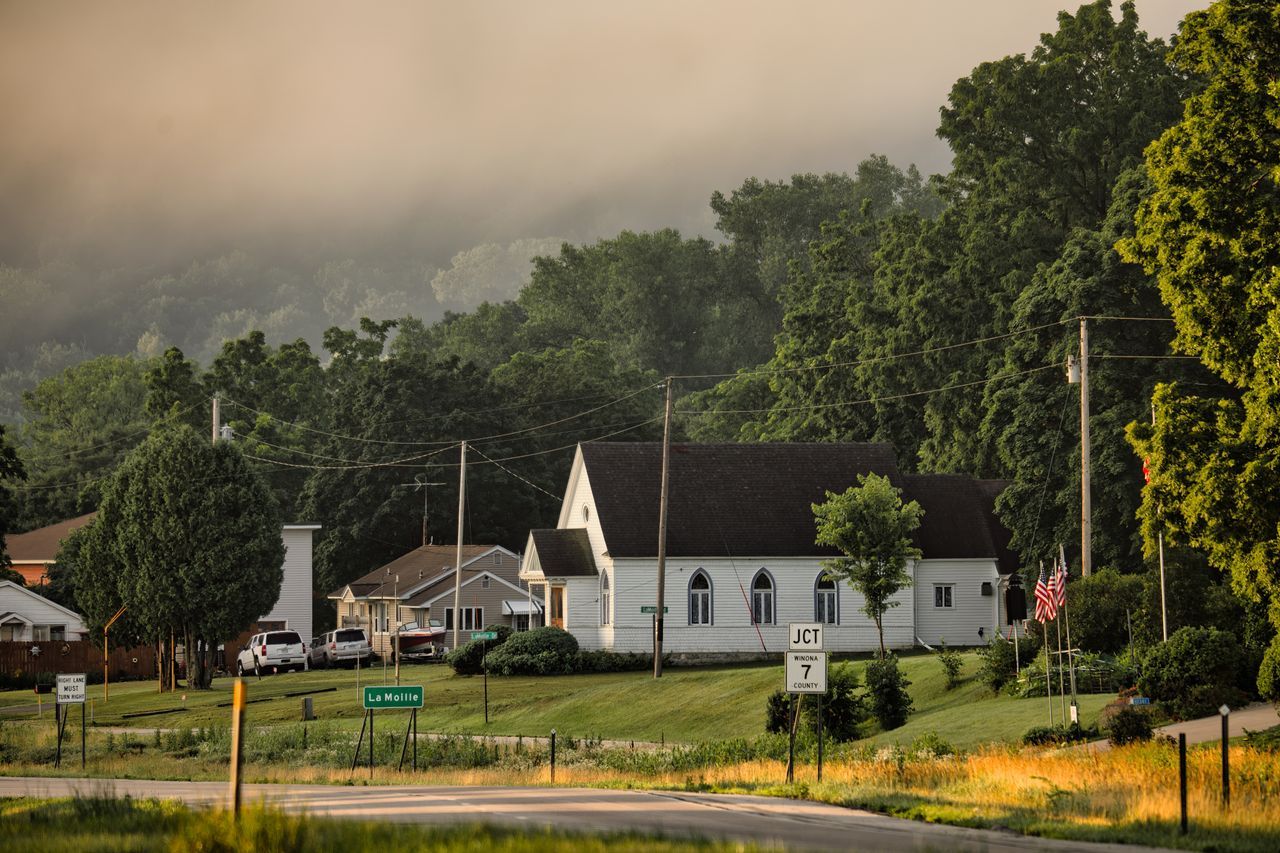
If you are over 60 and live in a small town, the phrase “dating over 60 near me” probably produces a short mental list. You may already know most of the single people in your area. You may have already dated one of them, or decided not to. The usual advice about putting yourself out there assumes there is a “there” large enough to absorb you anonymously, and in a town of five or ten thousand people, that assumption falls apart.
Small-town dating after 60 is not simply dating with fewer options. It is dating inside a social fabric where your choices are visible, your history is known, and your privacy requires effort. This guide is for readers dealing with that specific version of the problem, not the generic version that assumes a city-sized pool somewhere nearby.
What Makes Small-Town Dating Different After 60
The constraint is not only numerical. Research published in Frontiers in Public Health notes that roughly one in five older adults lives in a rural community where geographic isolation creates unique social challenges. But in a small town, the problem is rarely pure isolation. It is a specific kind of social closeness that makes dating harder in ways that urban advice does not address.
Everyone already has a category for you. In a small community, you are someone’s neighbour, someone’s former colleague, someone’s late husband’s friend. Stepping outside those roles into “person who is dating” requires renegotiating how people see you. That renegotiation is visible in a way it would not be in a city.
The pool is known, not just small. It is one thing to know that fewer singles exist in your area. It is another to be able to name them. When you can list most available people within 20 miles, the psychological experience changes. Every potential connection carries more weight, every rejection carries more social consequence, and every attempt feels less anonymous.
Social overlap is constant. In a city, a bad date disappears into the crowd. In a small town, you might see them at the hardware store on Saturday, the community dinner on Thursday, and the post office on Monday. This makes many people over 60 reluctant to try at all, because the cost of an awkward outcome lingers in daily life.
If the broader demographic picture interests you, the guide to what happens when the dating pool feels small after 60 covers the numbers and expansion strategies. What follows here goes deeper into the social reality that makes small-town dating a distinct experience.
For some readers, the underlying issue is less about dating and more about loneliness after 60. That guide covers building broader social connection before, or alongside, any romantic search.
The Privacy Problem
Many single adults over 60 in small towns delay or avoid dating not because they lack interest, but because they lack privacy. The concern is real and proportionate: in a community where news travels through coffee shops and church parking lots, being seen on a dating app or spotted with someone new becomes public knowledge quickly.
This matters more at 60 than at 30 because the social stakes are different. You may have children and grandchildren in the community. You may have a reputation built over decades. You may have experienced the death of a spouse that people remember. The transition from “grieving widow” or “settled bachelor” to “person who is actively dating” is one that many people in small towns want to manage privately before it becomes community conversation.
Practical approaches that help:
Use apps where your profile is not publicly searchable. Platforms like SilverSingles and eHarmony do not display profiles to non-members and do not show up in Google searches. This provides a layer of privacy that Facebook Dating or more open platforms cannot offer.
Set your radius wider than your immediate area. If you set your dating app radius to 50–75 miles rather than 10–15, you are more likely to match with people outside your immediate social circle. The first meeting can happen in a neutral town between you, where neither of you is known.
Tell one trusted person. Complete secrecy is exhausting and often unnecessary. One friend who knows you are looking provides both practical support (someone to tell where you are going) and emotional support (someone to debrief with) without making your dating life a community-wide topic.
One reader, a widower at 66 living in a town of 6,000 in central Illinois, described the privacy challenge: “Everyone knew my wife. Everyone came to the funeral. When I joined Match eighteen months later, I used a photo that was clearly me but set my location to a city 40 miles away. I did not want the first conversation to be at the barber shop asking who I was seeing.”
The privacy concern is legitimate, but it is also solvable. It requires intention, not secrecy at all costs.
Where Small-Town Singles Over 60 Actually Meet People
The standard advice for meeting people after 60 assumes access to a range of venues: classes, meetup groups, large community centres, speed dating events. Readers who do have access to those venues — in suburbs or mid-sized cities — will find the guide to meeting singles over 60 near you more directly useful. In a small town, many of those do not exist. What does exist is social infrastructure built on repetition and familiarity. The challenge is repurposing it.
Regional community groups. Many volunteer organizations, book clubs, hiking groups, and faith communities draw members from a 30–40 mile radius, not just one town. The group meets weekly or monthly, often in a central location. Over time, you encounter the same people repeatedly. That familiarity is what connection requires. Community groups that bring people together after 50 covers the mechanics of joining and participating.
Volunteering on regional projects. Habitat for Humanity builds, community garden networks, library systems that span counties, historical societies, and food bank distribution centres all draw people from wider areas than a single town provides. Volunteering as a way to meet people explores this approach in more depth. What matters is choosing activities where the same group shows up consistently, not one-off events.
Classes and workshops in the nearest larger town. If you live 30 minutes from a town with a community college, a recreation centre, or a YMCA, their evening and weekend programming can function as a social pool you would not otherwise access. Art classes, cooking workshops, language courses, and fitness programs designed for older adults all create the conditions for repeated low-pressure contact.
Church, faith groups, and service organizations. In many small towns, these remain the primary social infrastructure for adults over 60. Even if you attend regularly, you may not have considered them as a path to meeting someone. Interfaith events, regional church retreats, service projects, and social suppers create contact with people from neighbouring communities.
The “introduce me” conversation with friends. In a small town, the social network is tight but often underused for matchmaking. One reader, a retired nurse in a Vermont town of 3,500, described her approach: “I told three friends I was ready to meet someone. Two of them knew single men in surrounding towns that I had never crossed paths with. One introduction turned into a monthly dinner arrangement that has been going for two years.”
The common thread: small-town dating success usually comes from activities that draw people across a wider geographic area than daily life covers. Hobbies that help you meet people after 50 offers specific options if you are not sure where to start.
When Apps Are the Only Realistic Option
For some small-town readers, community-based strategies are limited by health, mobility, transportation, or the simple fact that there is nothing within reasonable distance. In those situations, dating apps become the most practical tool, and using them well in a rural context requires different expectations than urban users have.
What to know:
Low local activity is normal. If you set your radius to 15 miles in a rural area and see three profiles, that does not mean the app is broken. It means there are three people near you. Widen to 50 or 75 miles before deciding whether the platform has critical mass for your area.
Patience is structural, not optional. In a city, people match within hours. In a rural area, you may wait days or weeks for a new profile to appear in your range. This is not failure. It is the density of your area expressing itself on the platform.
Message-first apps may suit you better. Swipe-based apps (Bumble, Tinder) work on volume. When volume is low, they feel empty. Message-first platforms (Match, eHarmony, SilverSingles) allow you to write to specific people whose profiles interest you, which works better when options are sparse but each person deserves genuine attention.
Be honest about location in your profile. If you live 40 miles from the nearest city, say so. Matches who are willing to bridge the distance will self-select, and you avoid the disappointment of someone who was enthusiastic until they realised the drive.
For a detailed breakdown of which apps work best for adults over 60 and how to evaluate them, that guide covers individual platforms. For readers who want a direct comparison of which apps have enough users outside metro areas to be worth joining, the comparison of senior dating apps for small towns evaluates each platform on local density rather than features. What matters here is the mindset adjustment: rural app use rewards steady patience, wider radius, and lower-volume but higher-quality engagement.
Making Peace with the Drive
In a small town, dating almost always involves travel. Accepting that early, rather than resenting it, changes how the experience feels.
At 60 or 65, if you are retired or semi-retired, your schedule has more flexibility than it did during working years. A 45-minute drive to meet someone for lunch is not the same burden it would have been at 40 with a commute already consuming two hours daily. Many small-town couples who met through apps describe the early months as a rhythm of planned visits, alternating who drives, and meeting in towns between them.
What makes the travel sustainable:
Alternate the effort. If both people take turns driving, neither bears the full cost of distance. If one person lives closer to shared amenities (restaurants, parks, museums), hosting occasionally balances the equation.
Combine the trip. If you are driving 40 minutes to meet someone, plan the errand, the shopping, or the appointment you would have made that trip for anyway. The date becomes one stop on a trip you already planned, which reduces the emotional weight of “driving all that way just for a date.”
Treat it as temporary. Many couples who started at a distance eventually found a rhythm: weekends together, weekdays apart. Some relocated eventually, but only after the relationship had proven itself. The drive is not forever. It is the cost of discovery in a geographically spread-out landscape.
Frequently Asked Questions
Is it possible to date over 60 if I live in a very small town?
Yes, though it requires more intentionality than dating in a larger area. The strategies that work tend to involve wider geographic radius (on apps), regional rather than local social activities, willingness to travel for early meetings, and using your existing social network for introductions. The pool is smaller, but it is not zero, and many of the people in it are invisible through daily life alone.
How do I keep my dating life private in a small community?
Use apps that do not show profiles publicly, set your radius wider than your immediate town, meet initial dates in neutral locations between communities, and tell only one or two trusted people rather than broadcasting. Complete secrecy is usually unnecessary. Quiet discretion while you figure things out is both practical and achievable.
Are dating apps worth it if I live in a rural area?
They can be, but they require adjusted expectations. Local activity will be low. Widen your radius to 50–75 miles, use message-first platforms rather than swipe-based ones, and expect a slower pace of matching. Apps are often the only way to encounter single people beyond your immediate social circle, which makes them valuable even if the experience feels quieter than what urban users describe.
What if everyone in my town already knows me?
That familiarity can work both ways. It means some people may hesitate to ask you out, but it also means trusted friends can facilitate introductions. What helps most is signalling to a small number of people that you are open to meeting someone. You do not need to advertise. One or two conversations with trusted friends often produces a connection that your daily routine would never have surfaced.
How far is too far to travel for a date?
There is no universal limit, but 45–75 minutes each way is common among small-town daters over 60. If both people alternate driving and the connection is genuine, most find that distance becomes a minor logistical detail rather than a defining feature of the relationship. What feels unsustainable is usually the imbalance (one person always driving) rather than the distance itself.
What Small-Town Dating Rewards
Dating in a small town after 60 is slower, more visible, and more deliberate than its urban equivalent. Those are real constraints. They are also, in some ways, advantages. The connections that do form tend to carry more weight. The effort required filters out people who are casually curious and selects for people who are genuinely interested. And the social fabric that makes dating harder also means that when a relationship works, it integrates naturally into a life that already has structure.
You do not need to solve every small-town constraint at once. Start with one thing: widen a radius, tell a friend, join a regional group, or simply decide that the drive is an acceptable cost for now. Small adjustments produce most of the change.