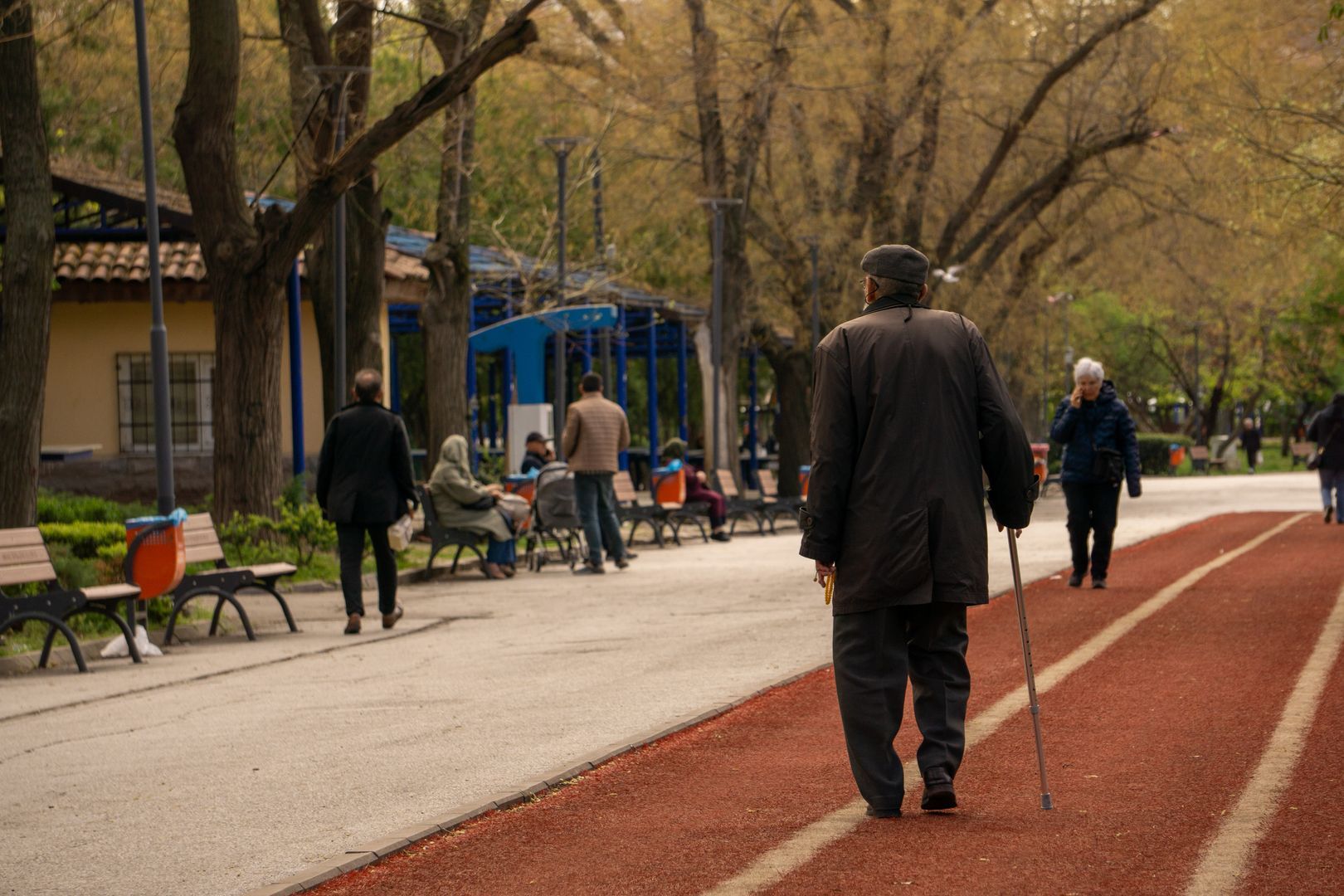
Editorial note: This guide draws on CDC data showing that approximately 2 in 5 adults aged 65 and older report a disability, with mobility limitations among the most common functional difficulties in this age group. It also draws on research into identity integration among people with acquired disabilities and on reader conversations about what it means to date when your body requires planning that it once did not. We are not medical professionals or disability specialists. If mobility changes are recent or progressing, your care team is a better resource than any article for decisions about physical capacity.
You already know what your body can and cannot do. You know which pavements are too uneven, which restaurants have steps at the entrance, which times of day your joints cooperate and which they do not. You have been managing dating with mobility issues in every other area of your life (grocery shopping, family visits, medical appointments) long enough that the logistics are no longer novel. What is novel is applying that same planning to something as emotionally exposed as a first date.
The fear underneath is not really about logistics. It is about what the logistics mean.
If you have to ask about step-free access before suggesting coffee, if you have to check whether the car park is within fifty metres, if you arrive early to scout the route from the door to the table, then you are admitting something you may not have fully named yet. You are admitting that your body has changed the terms of how you move through the world, and that this change is permanent enough to reshape even the parts of life you hoped it would leave alone.
That admission is the actual barrier. Not the wheelchair, not the walking stick, not the arthritis that slows your mornings. The barrier is what it means to yourself that these things now require advance thought in a context where you once operated without thinking about your body at all.
If that landed with weight, stay with it. This guide does not begin with a list of accessible venues. It begins here because the logistics only feel burdensome when they carry the weight of identity loss on top of them. Separated from that weight, they are just planning. And planning is something you are already good at.
Why This Feels Like Admitting Something
There is a specific grief that comes with acquired limitation. Not the limitation itself, but the gap between who you were and who the accommodation implies you are now. Research on identity integration in people with acquired disabilities found that people navigate between two poles: actively processing the limitation into their existing identity, or experiencing the limitation as having wholly transformed who they are. The people who adapt, not happily necessarily but functionally, tend to be the ones who fold the limitation into a continuous sense of self rather than letting it replace everything that came before.
In dating, this tension is especially sharp. Dating asks you to present yourself. And the question of how to present a body that now uses a walker or moves slowly or cannot sit for more than an hour without pain touches identity in a way that booking a GP appointment does not.
A 67-year-old reader who began using a walking stick after a hip replacement described it this way: “I kept postponing it. The dating thing. I told myself I was waiting until I felt more mobile, but honestly I think I was waiting until I felt like myself again. The stick wasn’t just a stick to me. It was — I don’t know how to say this without sounding melodramatic — it was proof. That I wasn’t who I used to be. In front of a stranger, specifically. My daughter kept saying ‘Mum, you’re being ridiculous, nobody cares about your stick.’ My physiotherapist said it was a completely normal response to a mobility change. And maybe they were both right. But my daughter is forty-two and married and my physio walks everywhere, so. I wasn’t really looking for permission from people whose bodies still do what they expect.”
That reader arrived somewhere useful, even if she could not name it cleanly: the stick is not the problem. The problem is what the stick represents in her own internal narrative. And that narrative is adjustable, not through positive thinking, but through enough experience of being treated normally while using the stick that the symbol gradually loses its charge.
For readers whose limitation is less visible, like chronic pain, balance issues, or limited stamina, the identity tension works differently. There is no stick to see. The limitation is private. And the question becomes not “how do I explain this visible thing” but “how long can I perform normalcy before the gap between what they see and what I manage becomes unsustainable?” The guide to dating after 60 with chronic illness addresses that specific tension in depth. For readers whose challenge sits more in self-image than in physical logistics, the guide to body confidence and dating after 50 may be a closer fit.
What You Are Actually Planning (And What You Are Not)
Here is something that took most readers months to notice: the dates they planned around their mobility were often better than the dates they remembered from before.
Not because limitation is secretly a gift. It is not. But because when you have to think about where you will sit, how close the car park is, and whether you can leave without negotiating a staircase, you end up choosing venues that are quiet, comfortable, and close. You end up with seating arranged for conversation rather than performance. You end up leaving at a reasonable hour because you planned to, not because neither of you had the nerve to suggest it.
None of that erases the grief of needing to plan at all. But it does change what the planning produces. The word most readers eventually arrive at is not “accommodation.” It is something closer to “curation,” though most would not use that word unprompted. The shift is not dramatic. It is the difference between “I have to choose carefully” and “I am choosing carefully.” Same logistics. Different relationship to them.
The Venue Check
Before suggesting any location, run four questions. This is not a clinical checklist. It is a two-minute scan that prevents the kind of mid-date problem that costs more energy than the date itself.
The four questions:
- Is there step-free access from where I arrive to where I sit? (Car to table, not just “the building has a ramp somewhere.”)
- Can I sit down within two minutes of entering? (Not “there are seats eventually” — within two minutes of walking through the door.)
- Is parking or drop-off within fifty metres of the entrance? (Or: is the route from public transport flat and short?)
- Can I leave comfortably at any point without it becoming a scene? (A table near the door, not a booth at the back of a crowded restaurant.)
If all four are yes, the venue works. If one is no, decide whether that one matters enough to you today to choose somewhere else.
Worked example — evaluating two options:
Your match suggests Saturday afternoon. You want to say yes. Two options come to mind:
Option A: Coffee at the new café on Bridge Street. You know Bridge Street. The café is upstairs. There is a lift, but you have never checked whether it works. Parking is a multi-storey two streets away. You have been there before for a quick takeaway, never to sit. Unknown seating layout.
Run the check: Step-free? Uncertain (lift exists but unverified). Sit within two minutes? Unknown. Parking within fifty metres? No — two streets. Easy exit? Unknown layout.
Result: Three unknowns and one clear no. Suggest somewhere else or scout first.
Option B: The garden café at Ashworth Park. Flat path from the car park. Tables outside with wide spacing. Parking within thirty metres, on the same level. You have been before, and you know the bench by the water is comfortable and you can see the exit path clearly.
Run the check: Step-free? Yes. Sit within two minutes? Yes — tables visible from the path. Parking within fifty metres? Yes — thirty metres, flat. Easy exit? Yes — clear path, no obstacles.
Result: All four pass. Suggest this one.
Plan the exit before you plan the entrance. That single principle transforms venue selection from a limitation exercise into a quality filter. Every person who dates well after 60 eventually learns this, mobility limitations or not. You are simply learning it earlier and more deliberately.
The Venue Check is not about limiting yourself. It is about choosing venues where you can be present for the person in front of you instead of managing your body in real time. For readers who want broader first date guidance beyond accessibility, the general principles apply here too. The Venue Check is simply one additional layer.
When and What to Tell Someone
Disclosure when you have visible mobility limitations is structurally different from disclosing an invisible condition. If you use a wheelchair, walker, or cane, the other person will see it immediately. The conversation is not “I have something to tell you.” The conversation is “here is what this means in practice.”
That distinction matters. You are not revealing a hidden fact. You are providing context for something already visible. The emotional weight of disclosure (the confession feeling, the brace-for-rejection tension) is often disproportionate to what the conversation actually requires, because the person already knows. They swiped right knowing. They replied to your message knowing. If your profile photo shows the wheelchair, or your bio mentions the walking stick, the information stage is already past. What remains is logistics.
For visible limitations, the useful conversation usually happens when planning the first meeting:
“I use a walking stick, so somewhere with good seating and close parking works best for me. How about [venue]?”
“I’m a wheelchair user — works for me if the place is step-free. Do you know whether [place] is accessible? I can check if you’re not sure.”
“My mobility isn’t what it was — I’m good for about an hour before I need to head home. Shorter first dates actually suit me better anyway.”
Notice what these are not: they are not apologies. They are not medical histories. They are not invitations to reassure you. They are logistics, delivered with the same confidence you would use to say “I’m free after 3pm” or “I prefer somewhere quiet.”
For invisible limitations — chronic pain, balance problems, fatigue that is not externally visible — the decision is closer to the framework in the guide to talking about health issues when dating after 60. The short version: tell when it becomes practically relevant to what you are about to do together. If your pain means you need to leave after forty-five minutes, mention it before the date so neither of you is surprised. If it does not affect the next date, waiting is proportionate, not deceptive.
One thing I am genuinely uncertain about, and that reader conversations have not resolved: whether mentioning mobility aids in a dating profile helps or hurts in the over-60 age group specifically. Younger disability communities tend toward early disclosure as a filter. Several readers over 60 have described the opposite instinct: wanting to be known as a person first, before the aid becomes the first thing someone notices. I do not think there is a universal answer here. What I do notice is that readers who include it tend to report less pre-date anxiety, while readers who omit it tend to report better first-meeting chemistry. Both are trade-offs, not mistakes.
Planning Dates Around Your Body’s Patterns
The practical side of this is simpler than the emotional side. Once you have accepted that planning is not loss, the planning itself takes minutes.
Match the date to your energy, not your aspiration. If you are sharper and more comfortable in the morning, suggest brunch. If your joints loosen by afternoon, suggest 2pm coffee. Do not choose 7pm dinner to seem flexible when you know your body is finished by six.
Have a shorter version of every date in your head. If the plan is coffee and a walk, the shorter version is coffee only. If the plan is lunch, the shorter version is one course and good conversation. Decide before you arrive whether you will explain if you need to leave early, or simply say “I’ve had a lovely time, I need to head off.” Both are legitimate. Having the decision pre-made removes one thing from an already full cognitive load.
A 72-year-old reader who uses a mobility scooter described his approach: “I tell them I’ve got about an hour and a half in me, which is true. What I don’t say is that I could probably do two hours if I had to, but I’d spend the next day recovering and I’ve learned that’s not worth it for a first meeting. So I give them ninety minutes and if it’s going well, I say ‘I can stay a bit longer if you can.’ That gives me an exit that isn’t a rejection, and it gives them an invitation without pressure.” He added: “Took me about six terrible dates to figure that out. The first few I just stayed until I was in pain and then left abruptly and felt awful about it. My mate told me I was treating dates like physiotherapy appointments, enduring them until the timer went off. He wasn’t wrong.”
That reader’s approach works because it builds the constraint into the structure rather than fighting it in real time. His body’s pattern is not a variable to manage during the date. It is a parameter set before the date begins. And the result (ninety minutes with the option to extend) sounds generous, not limited.
For readers managing unpredictable conditions, where Tuesday is fine but Wednesday is impossible and you cannot know in advance, the useful habit is deciding beforehand what happens on a bad day. Will you cancel? Reschedule? Explain briefly? Having a pre-made rule means you do not spend flare days agonising over the social logistics on top of the physical ones.
What Other People’s Reactions Actually Tell You
The first time someone says “Is there anything I should know for when we meet?” you will probably feel disproportionate relief. That is worth noticing. The relief tells you how high the fear was set, not how extraordinary their response is. They are demonstrating basic adult competence. The bar was just very low in your imagination.
More confusing is the person who says too much. “That doesn’t matter to me at all! I don’t even notice things like that!” feels warm in the moment but watch what happens next. The actual test is not the initial response. The test is whether they remember when suggesting the next date. If you mentioned your walker and two days later they suggest a coastal trail with uneven steps, they heard the words but did not absorb the information. That gap between verbal warmth and practical memory is useful data.
Then there is silence. Someone learns about your mobility and the messages slow, or stop. The instinct is to read this as a verdict on your datability. It rarely is. A person who spent years watching a partner’s mobility decline may hold a firm boundary about not re-entering that dynamic. A person who imagined an active retirement and cannot yet adjust that picture may simply not be ready. Their withdrawal is self-knowledge expressed clumsily, not a review of your worth.
The response that stays with you longest, though, is pity. Not cruelty, not rejection, but the slight softening in someone’s voice when they say “I think you’re so brave.” You are not looking for someone who is impressed by your existence. You are looking for someone who is interested in your company. If those feel like different things, trust that distinction. It is sharper than it sounds.
Frequently Asked Questions
Should I mention my mobility aid in my dating profile?
There is no single right answer. Readers who include a photo showing their wheelchair or mention their walking stick in their bio report less anxiety before first meetings — the information is already known, so the date starts without a disclosure moment. Readers who omit it report stronger initial chemistry — the other person meets them as a whole person before the aid becomes a reference point. Both approaches are legitimate trade-offs. The question to ask yourself: would you rather filter early or connect first? Neither is wrong.
What are good first date ideas when you have limited mobility?
Anywhere that passes the Venue Check: step-free access, seating within two minutes, close parking, easy exit. In practice, this often means quiet cafés with ground-floor tables, garden centres with benches, museum cafés with accessible layouts, or pub gardens with flat paths. The specific venue matters less than the four conditions. A place where you can sit comfortably, talk easily, and leave without negotiating obstacles is a good date location regardless of mobility.
How do I date confidently when I use a walker or wheelchair?
Confidence in this context is less about feeling confident and more about acting on practical knowledge. You know what your body needs. You know which venues work. You know how long you can comfortably stay. Operating from that knowledge — choosing venues deliberately, setting time boundaries, being factual about logistics — is what confidence looks like from the outside, even when it does not feel like confidence from the inside. The feeling usually follows the practice, not the other way around.
Is it fair to date someone when you have physical limitations?
Yes. The framing of “fairness” implies you are imposing something on the other person by existing with a body that has limitations. You are not. You are offering companionship, conversation, warmth, humour, and presence — the same things anyone offers. The other person is an adult who can decide what works for them. Treating your own presence as a burden to be apologised for is not fairness. It is a pre-emptive rejection dressed as consideration.
How do I handle it if someone loses interest after learning about my mobility?
Notice what it tells you and resist the temptation to interpret it as a pattern. One person disengaging does not mean “people will always do this.” It means that specific person, with their specific history and capacity, decided something about their own needs. That is allowed, and it is not a referendum on your datability. If it happens repeatedly and the feeling accumulates, it may be worth examining whether the timing or framing of your disclosure is working against you. But the fact of someone occasionally not being the right fit is not evidence that you are undateable. It is dating.
Where This Leaves You
You do not need to feel confident to begin. You need a venue that passes four questions and the willingness to show up as you are, with the body you have, in a place where you can sit comfortably and talk to another person.
If you read this and decided that dating is not something you want right now — that your energy is better spent elsewhere, that the logistics feel heavier than the reward, that you are content in ways that do not require a companion — that is useful information too. Knowing what you do not want is as clarifying as knowing what you do. The planning skills described here are not going anywhere. They will still work whenever you are ready, if you are ever ready, on whatever timeline feels proportionate to your life.