Editorial note: This guide draws on reader conversations about what slow connection actually felt like in practice, and on research about relationship development in later life. A meta-analysis published in Developmental Psychology found that relationship satisfaction tends to increase from age 40 through 65, suggesting that people who form partnerships later often do so with greater deliberateness and self-knowledge. The Pew Research Center (2025) reports 90% smartphone ownership among adults 50-64, meaning most slow connections now develop through a blend of in-person time and daily digital contact. We are not therapists. If building closeness consistently triggers anxiety or avoidance, professional support may help more than any guide.
Most advice about early dating focuses on what to avoid: moving too fast, sharing too much, becoming too intense. This guide is about the other side of that question. Once you have decided to take things slowly, what does connection actually look like as it develops?
Slow connection is not the absence of progress. It is progress at a scale that respects both people’s nervous systems. It builds through accumulation rather than declaration, through repeated small acts of attention rather than dramatic gestures of commitment. After 50, this kind of building often produces more durable closeness than intensity ever could.
If you are still working out what kind of connection you want or whether you are ready to date at all, those questions may be worth settling first. If you are already content alone and approaching dating from curiosity rather than loneliness, the guide to dating when you are happy alone addresses that position directly. If you are at an earlier stage, still trying to move an acquaintance toward something more personal, the guide to turning an acquaintance into a closer connection covers that transition. This guide assumes you have already met someone promising and want to understand how closeness grows when you are not forcing it forward.
What Slow Connection Is Not
It helps to clear away some misconceptions.
Slow connection is not emotional withholding. You are not keeping someone at arm’s length or rationing your warmth. You are allowing closeness to develop at the speed of genuine knowledge rather than the speed of hope or loneliness.
It is not playing games. There is no strategic delay, no calculated waiting period, no attempt to create desire through scarcity. You are simply being honest about what you know and feel at each stage rather than performing certainty you do not yet have.
Slow connection is not a sign of low interest. Many of the strongest later-life connections develop slowly precisely because both people care enough to build carefully. Rushing is often evidence of anxiety masquerading as confidence, not evidence of stronger feeling. The distinction between intentional slowness and indefinite ambiguity matters, though — if months pass without any progression or shared understanding of what you are building, the guide to situationships after 50 addresses that specific difference.
And it is not passivity. Slow connection still requires active participation. You still initiate. You still show up. You still invest attention. You are simply investing it in proportion to what you actually know about the person rather than what you hope they will become. If your connection feels pleasant but stuck rather than slow and building, the guide to moving from pleasant dates to real connection addresses that specific pattern.
The Building Blocks of Gradual Closeness
Connection after 50 tends to develop through a specific set of repeated experiences. None of them is dramatic. All of them accumulate.
Consistency of contact. Not volume. Not intensity. Just steady presence over time. A person who texts you most mornings, who remembers what you mentioned last week, who shows up when they say they will. This kind of reliability is more connective than any grand gesture because it builds the unconscious expectation that the person will be there tomorrow. That expectation is the foundation of trust.
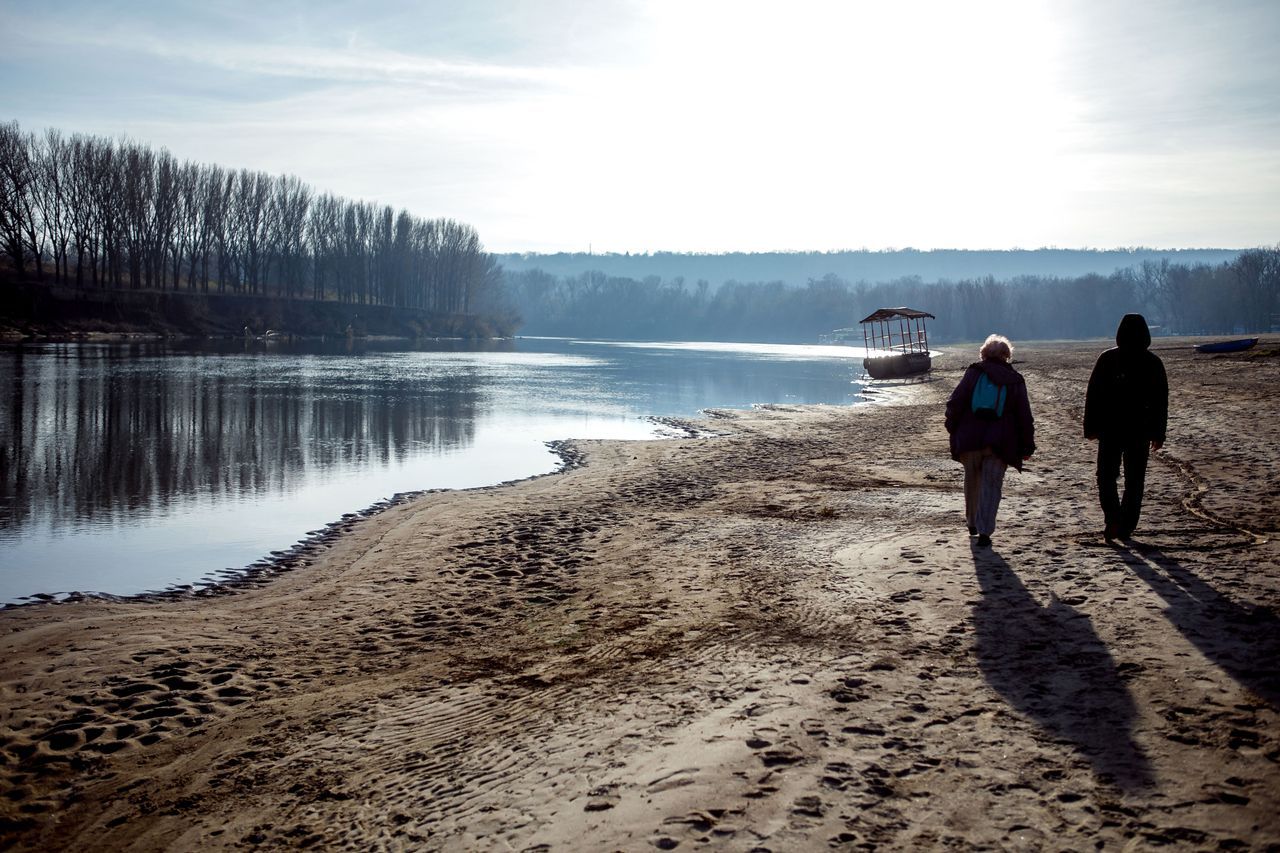
Low-stakes shared time. The most connective early experiences are often the least impressive ones. Walking together. Cooking a simple meal. Sitting in a park. Running errands in proximity. These activities build comfort with someone’s physical presence without the performance pressure of planned dates. They let you see how someone moves through ordinary life, which is ultimately what you are deciding whether to share.
Small disclosures in proportion to trust. Connection deepens when people share things that are mildly vulnerable, gradually, as trust builds. Not a full life history on date three. Not secrets weaponised as intimacy. Just the steady revealing of who you actually are: preferences, worries, pleasures, the ordinary private details that make a person feel known. The guide to how much history to share early on covers the sequencing of this more specifically.
Reciprocal curiosity. Connection builds when both people are genuinely interested in learning about each other rather than performing interest or projecting qualities onto each other. The questions shift over time from “what do you do?” to “what matters to you?” to “what are you afraid of?” That progression happens naturally when curiosity is genuine rather than scripted.
Comfortable silence. One of the clearest signs that connection is building is the ability to be together without filling every moment with conversation. If silence feels loaded or awkward after several weeks, the connection may still be in its performative phase. If silence feels peaceful, something has shifted.
Physical proximity without pressure. Closeness also builds through the body. Sitting a little closer than last time. A hand on the arm during a laugh. Walking close enough that shoulders brush. These small physical progressions, when they happen naturally rather than being forced, signal that both people are becoming comfortable in each other’s space. The guide to physical affection in new relationships covers the nonverbal signals and pacing of this kind of closeness in more specific terms. After 50, physical comfort often develops more gradually than emotional comfort, and that is fine. There is no schedule it needs to follow. The guide to physical intimacy after 50 covers what happens when that comfort eventually extends further.
The Timeline Is Not What You Think
People often imagine that slow connection means weeks of careful distance followed by a moment where everything clicks. In practice, it rarely works that way.
Slow connection more often looks like a gradual reduction in self-consciousness. You stop rehearsing what you will say. You stop monitoring their reaction to everything you do. You stop arriving at dates slightly anxious and leaving slightly relieved. Instead, their presence starts to feel ordinary in the best sense: familiar, unstressed, easy to be around.
This shift usually happens between weeks three and eight of regular contact, though the range varies widely. For some people, especially those who have been alone for a long time or who are rebuilding social confidence, it takes longer. That is not a problem. The timeline is less important than the direction.
What matters is whether the direction is toward ease. Even if the pace is slow, you should be able to notice that you are slightly more comfortable this week than last week. That the conversation feels a little less careful. That you are a little less conscious of how you are being perceived. These are small shifts, but they are the real currency of connection after 50. If you want to understand what makes conversation feel easy with the right person in more specific terms, that guide breaks down the observable signals.
The cultural emphasis on instant chemistry can make slow development feel like something is wrong. It is worth remembering that chemistry is not only a first-meeting phenomenon. Some people develop it through repeated proximity. The warmth arrives not in a flash but through accumulation, like a room that warms gradually after you light a fire. If you are specifically uncertain whether what you are experiencing is slow-building chemistry or no chemistry at all, the guide to chemistry taking longer after 60 offers a practical way to tell the difference.
One reader described it this way: “I kept waiting for the moment where I would know. But it did not arrive like that. It was more like one Tuesday I noticed I had texted her three times without thinking about it, and she had done the same, and neither of us had counted. That was the moment, I think. Except it was not a moment. It was just what Tuesdays had started to feel like.”
What Can Interrupt Slow Building
Several common patterns disrupt the natural accumulation of closeness.
Pressure to define. When one person asks “what are we?” too early, it can force a premature conclusion about a connection that was developing well. Definitions are useful eventually, but they work best when they describe what has already emerged rather than what someone hopes will emerge. If the question feels urgent to you or to the other person, the guide to talking about exclusivity addresses how to navigate that conversation without collapsing what is still forming.
Comparison with past intensity. If your previous relationship began with passion, fire, and rapid certainty, a slower connection can feel insufficient by comparison. But intensity at the start of a relationship is often a poor predictor of satisfaction at year three or year ten. If you catch yourself thinking “this does not feel like love,” consider that what you are feeling might be something more sustainable: comfort, ease, and the quiet pleasure of being around someone who does not require performance.
Inconsistent contact. Slow building requires regular contact. If weeks pass between meetings or if messaging drops off for days at a time, the connection does not pause. It deflates. Slowness means unhurried, not infrequent. You can see someone once a week and still be building steadily. You cannot see someone once a month and expect the thread to hold. For couples separated by geography, maintaining that regularity takes more deliberate planning — the guide to long-distance dating after 50 covers how to sustain closeness across distance specifically.
External opinions. Friends or family who ask “so is this going somewhere?” can create pressure to evaluate a connection before it has had time to reveal its shape. Their impatience comes from care, but it can introduce doubt where none existed. If you are building something slowly and it feels good, other people’s timelines are not relevant to your process.
Over-analysis. Some people undermine slow connection by examining it too closely. They monitor their own feelings after every interaction, checking whether they feel “enough.” But early connection is not a thermometer you can read. It is more like a plant you are watering. Checking the soil every hour does not help it grow. Consistent care and patience do.
When Slow Building Is Working
You may not recognise slow connection while it is forming. Here are some signs that it is developing well, even if it does not feel dramatic:
- You think of the person at random moments during the day without prompting
- Seeing their name on your phone produces a small warmth rather than anxiety or obligation
- You have started to relax physically in their presence, sitting closer, laughing more easily
- You have shared something mildly vulnerable and felt met rather than exposed
- You have noticed small details about them that you could not have known without repeated attention
- Your conversations have started to reference shared memories and inside references
- The prospect of not seeing them next week feels like a genuine loss rather than a neutral scheduling fact
None of these is proof of love. They are signs that something real is forming through the slow process of mutual attention. That process, given enough time and consistency, is how most lasting connections actually begin.
It is also worth noting what is not on this list: grand declarations, expensive gifts, dramatic gestures, or the feeling of being swept off your feet. Those experiences are not bad, but they are not reliable indicators of connection. They are indicators of intensity, which is a different thing entirely. Intensity can coexist with connection, but it can also substitute for it. The signs above are quieter, and they are more durable.
If you notice several of these signs developing simultaneously, you are probably in a connection worth continuing to invest in. If you notice none of them after six or eight weeks of regular contact, that absence is useful information too. Not every promising start develops into genuine closeness, and recognising when it is not happening saves both people from the particular sadness of a long, polite drift toward nothing.
Trusting the Process Without Forcing the Outcome
Building connection slowly requires a specific kind of patience: the willingness to be in motion without knowing the destination. You are investing in someone without a guarantee that the investment will produce a partnership, a commitment, or even a lasting friendship. If the connection does develop into something ongoing, the guide to navigating a new relationship after 50 covers what comes next — the practical questions about expectations, family, finances, and structure that a formed relationship eventually requires.
That uncertainty is not a failure of the process but the substance of it. Connection that develops through genuine knowledge always carries the risk of discovering that the fit is not right. That discovery, when it comes, is not wasted time. It is the honest result of attention paid.
If you are someone who finds uncertainty difficult, it can help to focus on whether you are enjoying the present stage rather than whether it is leading somewhere. A connection worth building is one that feels good to be in right now, not only one that promises a future you can plan around. If the uncertainty involves genuinely mixed signals — warmth followed by distance — that guide covers how to read the pattern and decide what it means.
It can also help to notice that slow building is a skill that improves with practice. The first time you try to let a connection develop without forcing it, the uncertainty may feel unbearable. The second time, slightly less so. Over time, the ability to be in motion without knowing the destination becomes its own kind of confidence. You learn to trust yourself to notice what is real when it arrives, rather than needing to decide before the evidence is in.
Dating at a healthy pace after 50 means accepting that some connections will develop fully and others will not, and that the slow ones are not less valuable for taking longer to reveal their shape. What you are building when you build slowly is not just a connection with another person. It is a practice of relating that respects your own rhythm and theirs. That practice, regardless of any single outcome, is worth keeping.