Editorial note: This guide draws on Pew Research data on how older adults form relationships, reader accounts from women over 60 who met partners offline, and research on social networks and relationship formation from Psychology Today. We are not matchmakers. This guide describes where connection tends to happen, not where it is guaranteed to.
If you are a woman over 60 wondering how to meet men your age without relying on dating apps, you are not behind the curve. You are asking a practical question that apps have not actually solved for most people in your demographic. Pew Research data shows that only about 19% of adults over 50 have tried online dating at all. The majority of people who form connections after 60 still do it the older way: through proximity, repetition, and shared context.
The challenge is knowing where to create those conditions when your daily life may not produce them naturally anymore. This guide covers where single men over 60 actually spend their time, how to be present in those spaces without it feeling contrived, and why the approach that works at this age looks different from what dating culture usually suggests. For a gender-neutral overview of all the main pathways, the guide to how seniors meet other seniors maps the broader landscape.
Why Apps Are Not the Only Path
The assumption that dating requires apps has become so pervasive that choosing not to use them can feel like opting out entirely. It is not. Apps work for some people over 60, and the guide to dating over 60 apps and meeting places covers them fairly. But they also fail quietly for many: low local activity, exhausting swipe dynamics, profiles that feel nothing like the people behind them.
For women over 60 specifically, the app experience often includes an imbalanced inbox (too many low-effort messages), difficulty filtering for genuine interest, and a format that rewards visual first impressions over conversational depth. What actually changes about dating after 60 for women covers the broader landscape. Here the focus is narrower: what works when apps are off the table.
Research from Stanford sociologist Michael Rosenfeld consistently finds that a large share of couples still meet through social networks, shared activities, and everyday settings. Among adults over 50, these paths are even more common than app-based ones. The question is not whether offline meeting works. It is where to aim your presence.
Where Men Over 60 Actually Spend Time
Understanding where single men over 60 concentrate matters because it differs from where many women assume. Men over 60 tend to gravitate toward structured activities with a purpose beyond socialising. They show up reliably to things that have a schedule, a task, or a shared interest at the centre.
Activity-based groups with structure. Golf clubs, woodworking shops, photography walks, cycling groups, fishing clubs, classic car meets, and amateur sports leagues (pickleball, bowling, tennis). These attract men who want company alongside an activity, not company as the activity. The structure removes the pressure of pure socialising and gives everyone something to talk about that is not themselves.
Volunteer organizations with hands-on work. Habitat for Humanity builds, trail maintenance crews, food bank distribution days, historical society restoration projects, community garden committees. Men over 60 often prefer volunteering that produces a visible result over committee-style volunteering that involves meetings and email chains. The physical, task-oriented settings tend to have more men.
Educational settings with a subject focus. Community college courses in history, languages, astronomy, or local ecology. Lecture series at museums or libraries. University of the Third Age (U3A) groups. These attract retired men who remain intellectually curious and want regular structure in their week.
Faith communities and service groups. Church suppers, interfaith dialogue events, service-oriented groups like Rotary or Lions clubs. Many men over 60 participate in these because they provide structure, purpose, and familiar faces without requiring them to label the experience as “socialising.”
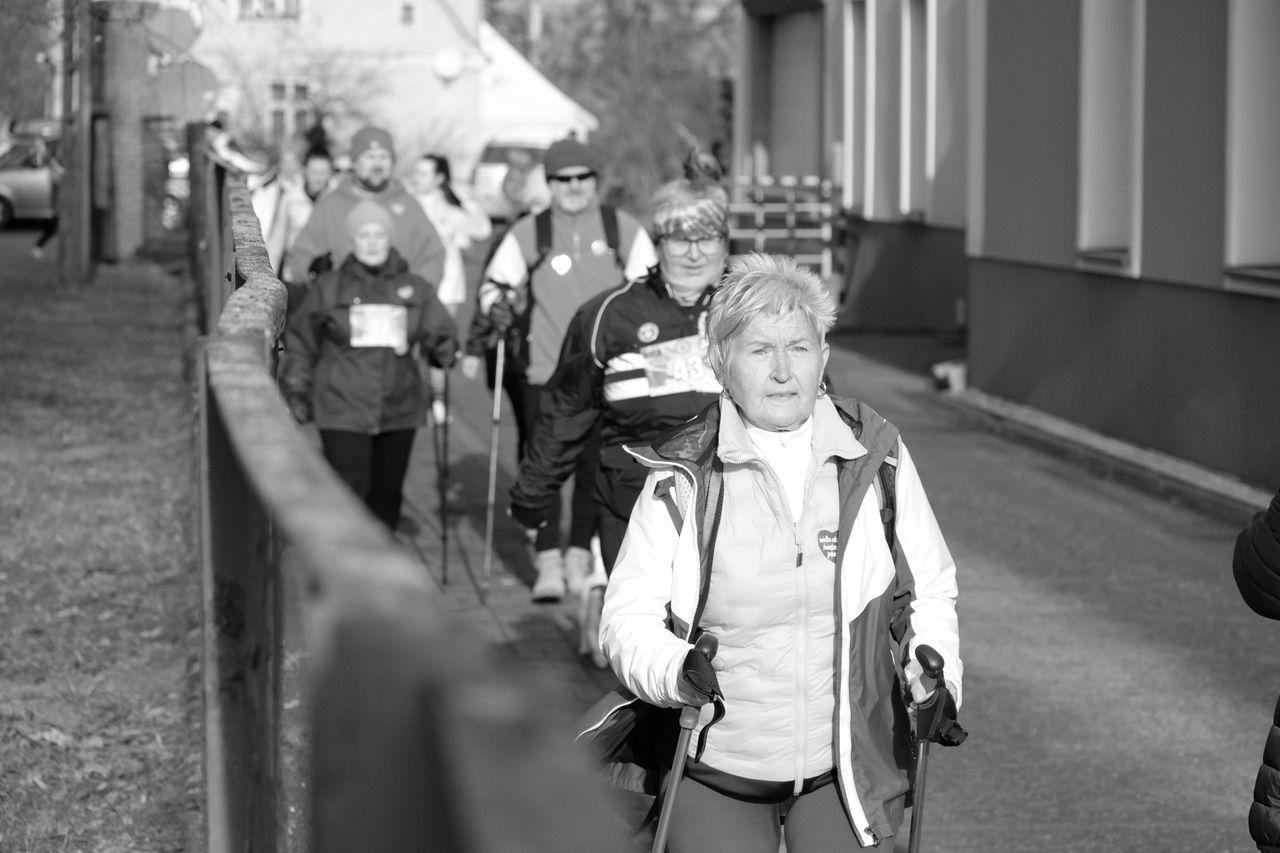
Outdoor and physical pursuits. Walking groups, hiking clubs, birdwatching associations, allotment societies, and park conservation volunteers. Men over 60 are often more comfortable connecting while doing something physical side by side than sitting face to face at a social event.
The pattern across these is consistent: men over 60 show up to activities that give them a reason to be there beyond meeting people. If you want to meet them, being present in those same structured environments puts you alongside them repeatedly without either of you needing to perform availability.
The Friend Introduction Path
Research on how people form relationships consistently finds that introductions through mutual friends remain one of the most effective paths to lasting connection. Among adults over 60, this matters more than at younger ages because the social network is tighter and trust carries more weight.
The practical challenge: most friends do not offer introductions unless they know you are receptive. And many women over 60 do not mention it because the topic feels loaded or because they assume their friends would have already thought of it.
What works:
Be specific about what you are open to. “I would enjoy meeting someone for regular company” is clearer and less pressured than “I am looking for a relationship.” Friends respond better to low-stakes framing because it makes introducing someone feel less high-consequence for everyone involved.
Tell two or three people, not everyone. The goal is not to broadcast availability. It is to give a small number of trusted friends permission to think of you when they encounter single men. One reader, a retired librarian in Connecticut, described the approach: “I told my two closest friends that I would welcome an introduction if they ever thought of someone. One of them introduced me to her neighbour’s brother six weeks later. We have been seeing each other for eight months.”
Make it easy for the introducer. Suggest a group setting for the first meeting rather than a formal date. A dinner with four people, a group walk, or a community event where you happen to both be present removes the awkwardness of a setup and lets connection develop without pressure.
Do not limit your network to women. Male friends, brothers-in-law, former colleagues, and community acquaintances often know single men that your female friends do not encounter. Cross-gender networking for introductions is underused among women over 60.
The guide to meeting people through community groups after 50 covers the broader mechanics of how repeated contact builds familiarity. The friend-introduction path shortcuts that process by providing a warm reference and a shared connection from the start.
How to Signal Availability Without Performing It
One of the reasons meeting men over 60 without apps feels difficult is that the conventional signals of availability (flirting, dressing up, attending singles events) do not match how most women over 60 want to present themselves. The desire is real. The performance feels wrong.
A different model: availability through presence, warmth, and openness to conversation. Not performing interest in anyone specifically, but being genuinely available to connection in general.
In practice, this looks like:
Accepting invitations you might normally decline. The dinner party you almost skipped. The community event that sounded only mildly interesting. The group trip you considered but thought you were too tired for. These are not dates. They are opportunities for proximity with people you have not yet met. Hobbies that help you meet people after 50 works on the same principle: it is not the hobby itself that matters, it is the repeated presence alongside unfamiliar people.
Being conversationally generous. Asking questions. Showing interest in what someone has to say. Responding with warmth rather than caution. These are not romantic signals. They are social ones. And they are often what distinguishes the person someone remembers from the person they do not.
Lingering briefly rather than leaving early. The few minutes after an event ends, when people stand around with their coats on, are often when casual conversation happens. Staying through that window, rather than leaving the moment the structured part finishes, creates space for connection to form at its own pace.
Saying yes to “let us do this again.” When someone suggests a repeat, following through is a signal of genuine availability. Many men over 60 test the water with low-stakes suggestions before anything that resembles a date. Treating those invitations as meaningful rather than throwaway often determines whether things develop further.
What Repeated Proximity Actually Produces
Meeting someone over 60 without apps rarely happens in a single encounter. It happens over weeks or months of repeated exposure in the same environment. You see the same person at the garden centre volunteering every Tuesday. You notice the same man at the walking group each Saturday. You sit near the same person at a community lecture series for three weeks running.
This slow accumulation of familiarity is how connection forms at 60 in ways that feel natural rather than forced. It mirrors how friendships develop at any age: through regular contact, shared experience, and the gradual sense that someone is pleasant to be around.
What this means practically:
Consistency matters more than variety. Going to the same places repeatedly produces more potential connection than sampling many different activities once each. Familiarity requires repetition, not novelty.
Men over 60 often move slowly. The timeline from “we keep running into each other” to “would you like to get coffee sometime?” may take weeks or months. This pace is not disinterest. It is the tempo at which many men over 60 operate socially after retirement, especially if they have been alone for some time.
The transition from acquaintance to something more is often quiet. At 60, romantic interest does not always announce itself dramatically. It may look like someone saving you a seat, offering to walk you to your car, suggesting a different event they are also attending, or simply finding reasons to talk a little longer each time. The complete guide to dating over 60 covers how this pacing works in the broader context of later-life relationships.
You do not need to attend with romantic intent. The most effective mindset is genuine interest in the activity itself. Women who join a walking group because they enjoy walking, not because they are scanning for prospects, tend to appear warmer, more relaxed, and more approachable. Ironically, people who are not visibly looking often attract more interest than those who are. The connection, when it arrives, tends to feel like a fortunate side effect of a life you were already enjoying.
Frequently Asked Questions
Where do single men over 60 spend their time?
Structured activities that have a purpose beyond socialising: sports clubs (golf, pickleball, bowling), volunteer work with physical tasks (trail maintenance, Habitat builds), educational courses, car or hobby clubs, and outdoor groups (walking, fishing, cycling). Men over 60 tend to prefer settings where connection happens alongside a shared activity rather than as the explicit goal.
How do you meet men without online dating?
Through repeated presence in structured social settings, introductions from trusted friends, community activities that attract your age group, and educational or volunteer environments where the same people show up regularly. The common factor is consistency: showing up to the same place often enough that familiarity develops naturally.
Is it harder to meet men after 60 than after 50?
The pool is smaller, and fewer men are actively looking. Among adults 65 and older, only 21% of men are single compared to 49% of women, which means the demographic imbalance is real. But the men who are available at this age tend to be clearer about what they want and more responsive to genuine connection than to superficial attraction. The search is often slower, but the connections that form tend to be more intentional.
How do you signal you are available without being obvious?
Through warmth, presence, and consistent social engagement rather than overt romantic signals. Accept invitations. Stay a few minutes after events end. Be conversationally generous. Tell two or three trusted friends you would welcome an introduction. These create the conditions for connection without requiring you to perform availability in a way that feels uncomfortable.
Can friends really help you meet someone at this age?
Yes, and research supports this. Studies consistently show that introductions through mutual friends are among the most effective paths to lasting relationships, particularly for adults over 50 where trust and social context matter more than initial attraction. The limitation is that friends often do not offer introductions unless they know you are open to them.
A Practical Starting Point
Meeting men over 60 without apps is slower than swiping, and it requires more intentional presence in your own community. But the connections it produces tend to feel more natural, develop with less pressure, and emerge from the kind of repeated contact that lets genuine compatibility reveal itself gradually.
If you are not sure where to begin: pick one structured activity that interests you and commit to attending regularly for two months. Not because you expect to meet someone there specifically, but because regular presence in a mixed-gender environment with shared purpose is the single most reliable condition under which connection forms at this stage of life. The companion guide for men — how to meet women over 60 without apps — covers where women this age spend time and what they respond to. If the pool in your area feels thin, what to do when the dating pool feels small after 60 covers strategies for expanding it.