This story is based on a real conversation with a reader who contacted us after reading other articles on this site. Names, locations, and identifying details have been changed, but the emotional arc — the administrative embarrassment of profile-writing, the specific quality of self-consciousness, the slow normalization of something that once felt impossible — reflects what was actually described to us. We publish it because the experience of dating after a long marriage in your 50s is common but rarely written about with the specificity it deserves.
After her divorce, the practical parts of life settled before the emotional ones did. The paperwork was finished. Friends stopped asking for updates in the careful tone people use when they are trying not to pry. The house was quieter in a way that was not always sad, only different. There were fewer dinners to think about, fewer calendars to compare, fewer small negotiations at the end of the day.
That stage can be hard to describe because it does not look dramatic from the outside. It looks like grocery shopping, paying bills, answering texts, remembering to take the car in for service. It looks like learning which routines were yours all along and which belonged to a marriage that has ended, even if some part of you is still catching up to that fact.
Ellen is far from alone in this. “Gray divorce” — divorce among adults over 50 — now accounts for roughly 36% of all U.S. divorces, up from 27% in 2010, according to the Institute for Family Studies. Research from Bowling Green State University found that the share of currently divorced adults aged 65 and older has tripled since 1990. The overall divorce rate has declined, but for this age group it has risen steadily. That means a growing number of people are navigating exactly what Ellen describes: the strange, undramatic aftermath of a long marriage ending in midlife or later.
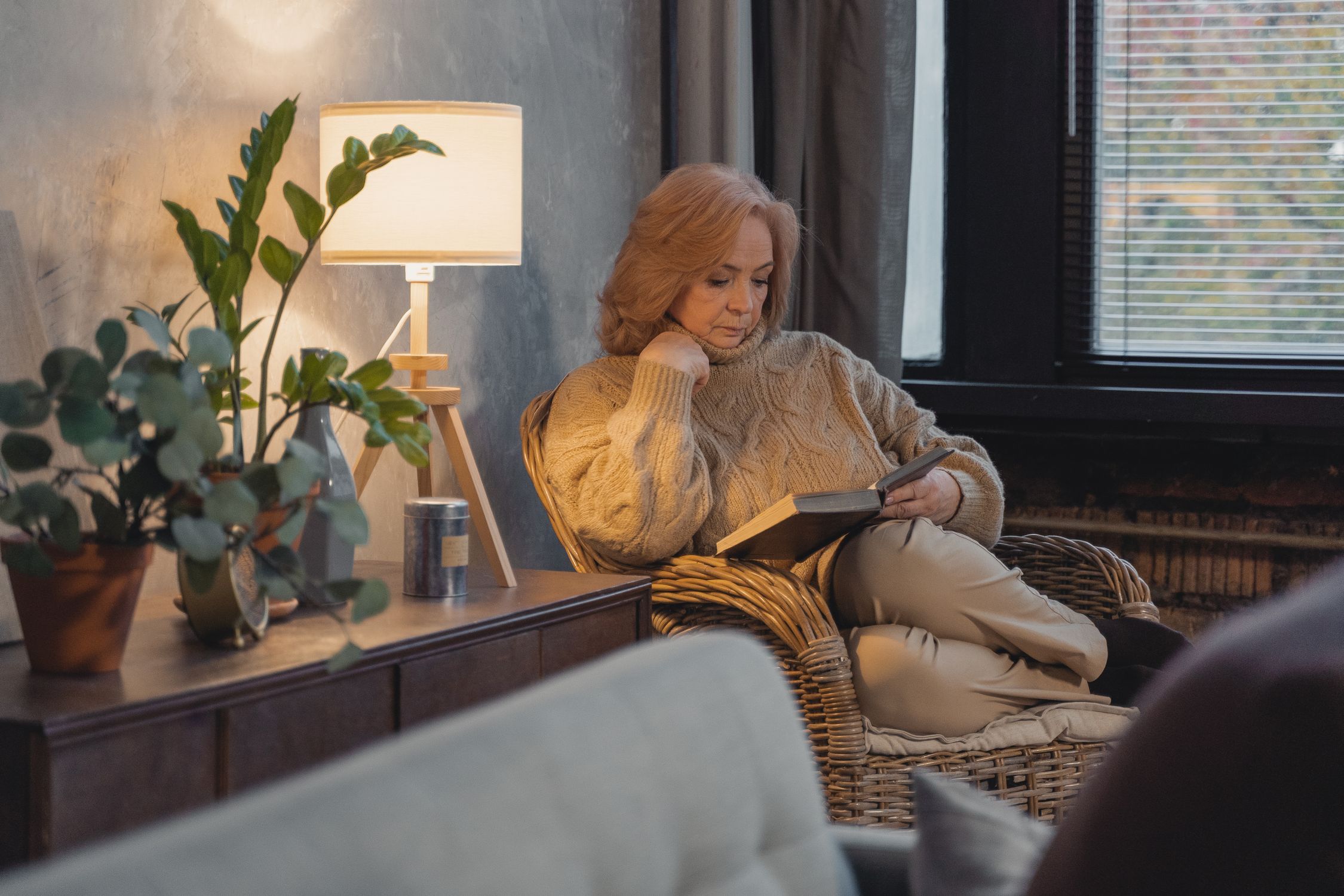
For the woman at the center of this story, whom we will call Ellen, the question of dating did not arrive as a bold decision. It entered more quietly than that. She was in her mid-50s, a few years out from a marriage that had lasted over two decades, and not especially interested in turning herself into a symbol of resilience. She was working, seeing friends, staying in touch with her adult children, and learning to appreciate a certain amount of peace. She had not built a dramatic new identity after divorce. She had simply gone on living, which is often what people do.
Still, the idea of companionship had not disappeared. It sat somewhere in the background, alongside ordinary caution and a faint sense of embarrassment. Not because she thought dating was beneath her, and not because she was secretly waiting for some perfect sign that she was fully ready. It was more that the whole subject felt unfamiliar in a way that did not match the rest of her life. She knew how to manage a budget, host a family lunch, change insurance plans, and get through a difficult week at work. She did not know, at least not yet, how to write a short paragraph about herself for strangers.
What makes later-life dating after divorce interesting is not that it is full of grand revelations. More often, it is full of small recognitions. You realize that loneliness and independence can live side by side. You realize that being cautious is not the same thing as being closed. You realize that the practical formats of modern dating can feel oddly juvenile even when the people using them are not. You also realize, sometimes with relief, that there is no need to make the experience larger than it is.
Ellen’s story belongs in that quieter category. It is not about dramatic reinvention or sudden romance. It is about what it feels like to re-enter dating when you already know yourself fairly well, but have not done this part of life in a very long time. It is about awkwardness, timing, self-protection, ordinary hope, and the slow shift from “I can’t imagine doing this” to “I may not enjoy every part of it, but I can probably do it.”
When the Marriage Was Over but the Story Wasn’t
By the time Ellen considered dating again, the most public part of her divorce was already behind her. There had been the legal process, the conversations with family, the practical division of a shared life. She had done what needed to be done. On paper, things were settled.
But that does not mean a long marriage disappears cleanly. Even when the relationship is clearly over, its shape remains in the room for a while. A marriage of decades leaves habits behind. It leaves ways of structuring a week, ways of answering the phone, ways of talking about the future without noticing that you are using the plural. It also leaves other people with their own adjustments to make. Adult children may be polite but watchful. Friends may not know whether to ask questions or leave the subject alone. Even everyday introductions can feel slightly altered when your life description changes.
Ellen said one of the stranger parts was how ordinary she seemed to herself on one day and how newly untethered she felt on another. There was no single emotional pattern to trust. Some mornings were efficient and calm. She would go to work, answer email, stop at the supermarket on the way home, and think very little about the marriage at all. Other days, something small would catch her off guard. A form asking for emergency contact information. A couple standing too long in front of the apples at the grocery store. A neighbor asking, with polite vagueness, how she had been.
What she did not feel was devastated in the way people sometimes expect divorce stories to sound. That absence of high drama can be disorienting too. If a marriage ends after many years, the aftermath is not always a clean break between grief and freedom. Sometimes it is a flatter emotional terrain than that. There can be sadness, certainly, but also administrative fatigue, relief, awkwardness, guilt, irritation, and long neutral stretches where life simply needs attending to.
That quieter reality mattered because it shaped how Ellen thought about dating. She was not trying to fill a dramatic void. She was not looking to prove that she had recovered well. If anything, she was protective of the steadiness she had managed to build. Her life had become more contained, but also more legible. She knew what time the house got cold in the evening. She knew which friend would say yes to a last-minute lunch. She knew that Sunday afternoons could feel a little long if she had nothing planned. These details sound minor, but they are often the real texture of life after divorce.
It also took time for her to separate the end of a marriage from the question of whether she wanted to be alone forever. Those are not the same question, but people often treat them as if they are. In Ellen’s case, there was a period when not dating felt less like a statement and more like a continuation of recovery. She was tired of emotional administration. Tired of explaining things. Tired, even, of other people’s interpretations of what the divorce meant.
Later, that changed slightly. Not all at once. She did not wake up one morning with a sudden appetite for a new romantic chapter. It was more that the resistance softened around the edges. If you recognize that slow shift — the resistance easing without ever becoming certainty — How to Know If You’re Ready to Date Again After 50 explores what that transition tends to feel like in practice. A friend mentioned meeting someone for coffee through an app and described it in such plain terms that it no longer sounded absurd. Another friend, divorced a little earlier, said dating did not have to be a referendum on her entire life. It could just be two people seeing whether they wanted to talk again.
That framing helped. So did time. Ellen had begun to understand that privacy and avoidance are not always the same thing. She did not owe strangers the whole story of her marriage. She did not have to narrate the worst years in order to be considered honest. She could acknowledge that she had been married a long time, that she had adult children, that she was dating cautiously, and leave the rest where it belonged until trust existed.
That distinction is easy to miss in the abstract, but it becomes important in practice. Many people re-entering dating after 50 are also trying to work out how much personal history belongs in the early stages. The answer is rarely “everything.” In our guide to online dating after 50 for beginners, we note that a measured pace is often less about defensiveness than about allowing judgment time to work. Ellen arrived at something similar on her own. She did not want secrecy. She wanted proportion.
There was also the question of identity, though she would not have used that word in a grand way. For years she had moved through the world as part of a pair, then as a recently divorced woman, which carried its own set of assumptions. Dating again required a third description, and she was not sure she liked it. “Single” sounded both too simple and too exposed. It suggested a kind of confidence she did not necessarily feel. If that resonates — particularly the physical dimension of feeling uncertain after a long marriage — the guide on rebuilding physical confidence after divorce addresses that territory directly. In truth, she was something less marketable than that. She was a capable middle-aged woman with a fairly normal life, some understandable hesitation, and a growing suspicion that avoiding the subject forever would not make it easier.
That is often the point where the story changes, though only by a degree. The marriage is over. The practical dust has settled. The person involved is not yearning dramatically, but neither are they entirely shut down. They are simply standing in a life that has become more stable and realizing that stability does not answer every question. Sometimes it only creates room for new ones.
The Strange Practicality of Starting Again
The first steps back into dating were not romantic. They were administrative in a faintly embarrassing way.
Ellen began, as many people do now, by asking friends what people actually used. Not in a sweeping cultural sense. In the practical sense. Which apps felt normal. Which ones seemed chaotic. Which ones were mostly inactive. Which ones demanded too much time. She did not want to join a platform that treated later-life dating like a novelty, but she also did not want to overthink the choice. After enough hesitation, practicality took over. She picked one, downloaded it, and sat with her phone in her hand for longer than she expected.
The profile setup was the part she disliked most.
Choosing photos felt strangely exposing — not because there was anything unusual about the pictures themselves, but because selecting them required a type of self-presentation she had not used in years. She scrolled through her phone’s camera roll: family gatherings where she was half-hidden behind a grandchild, holidays where the light was wrong, dinners out where she looked either too dressed up or too tired. One photo from a friend’s birthday was decent — she was laughing at something off-camera, wearing the blue cardigan she liked — but she spent ten minutes wondering whether it was “too casual” before reminding herself that she did not actually know what the correct level of casual was.
Then there was the short bio. A form of writing that seems designed to make reasonable adults feel either bland or performative. Ellen was not trying to sound witty. She was also unwilling to sound like a brochure for herself. She did not want to claim she loved adventure when what she really loved was having one or two plans a week and enough time to read. She did not want to list values as if she were interviewing candidates. She did not want to imply she was “young at heart,” a phrase many people over 50 seem to understand and few truly like.
So she wrote, deleted, rewrote. She made herself sound too brisk, then too careful. She added a line about liking long walks, then removed it because even she was bored by it. She mentioned having adult children, then wondered if that made her sound older than she felt. She left out the divorce entirely at first, then added “married for many years, now happily living on my own” and took “happily” back out because it sounded too polished for the truth. The whole exercise took her three evenings — far longer than she would have spent on any work email, and with considerably less confidence in the result.
This kind of discomfort rarely appears in romanticized stories about dating later in life, but it may be one of the most recognizable parts. Modern dating asks people to compress themselves into a format that often feels both too public and too thin. For someone in their 50s who has spent decades being known through ordinary life rather than self-description, that can feel vaguely unnatural. Ellen was not ashamed of her life. She just did not enjoy summarizing it.
Messaging was its own education. There were polite exchanges that ended quickly. There were men who opened with “Hi beautiful,” which she found easy to ignore and impossible to take seriously. There were a few profiles that seemed perfectly decent until the conversation began to lean too personal, too soon. Nothing catastrophic happened. That is part of what made the experience so ordinary. The discomfort was not about danger every time. Often it was just the low-level strain of trying to work out what counted as normal now.
She became aware of small practical questions she had never needed to ask in this way before. How quickly do you move from the app to texting? How much do you say about work? Is it rude to decline a phone call if you would rather keep messaging a little longer? How much personal detail is warm, and how much is simply too much for a stranger? The answers were not always difficult, but they did require attention.
That attention was not the same as fearfulness. It was discernment. People dating after divorce at this stage of life often have more to protect than they did in their twenties: not only privacy and safety, but also peace, routine, and a stronger sense of what drains them. Ellen was not looking for perfection. She was looking for coherence. If someone wrote in a way that felt pushy, she noticed. If they wanted immediate intimacy, she stepped back. If they seemed steady, she responded. If a conversation felt off, she no longer believed she had to continue simply because both parties had been polite.
The safety side of that learning curve mattered too, though she was careful not to become alarmed about it. She read enough to understand the basics and preferred simple precautions over fearful thinking. Meeting in a public place made sense. Keeping early conversations on the platform for a while made sense. Paying attention to whether a person’s story remained consistent made sense. The aim was not suspicion. It was steadiness. Our pieces on safe first meetings and spotting online dating scams before they go too far speak to that balance well: careful without becoming grim.
What stayed with Ellen most, though, was the mild embarrassment of being new at something she was old enough to discuss sensibly. She could recognize that a dating profile was not a profound moral test and still feel self-conscious making one. She could understand that a first message was just a first message and still reread it before sending. She could laugh, privately, at the fact that after a long marriage and a professionally competent life, she was now wondering whether “Nice to hear from you” sounded too cool.
That mix of maturity and uncertainty is part of what gives later-life dating its particular tone. You are not naive, but you are not practiced. You know a great deal about relationships in one sense and very little about this version of beginning. That gap can feel uncomfortable, but it is also honest.
Ellen did eventually finish the profile. She chose photos that looked like her on an ordinary good day. She wrote a few lines that were neither sparkling nor defensive. She pressed the final button with some reluctance and then put the phone down on the counter as if it might be asking too much of her.
Nothing transformed in that moment. The room did not change. She still had laundry to fold. But something small had shifted all the same. Dating had moved out of the category of abstract future possibility and into the category of things she was, however tentatively, willing to try.
What Felt Harder Than Expected
What surprised Ellen was not the existence of awkwardness. She had expected that. What surprised her was how many parts of dating seemed to involve timing rather than certainty.
The questions were rarely large enough to announce themselves as major emotional obstacles. They arrived in smaller forms. When someone asked how long she had been divorced, how much was a normal answer? If a conversation was pleasant, when did it become too personal to still be considered early? If someone asked about family, should she mention her adult children immediately or let that come up more gradually? None of these questions were tragic. They were simply harder to navigate than she had imagined.
Part of the difficulty was that later-life dating asks people to manage two instincts at once. One is the adult instinct toward candor — by your 50s, you usually have less appetite for posturing, less energy for games, and more interest in being direct. The other is the equally adult instinct toward proportion — not every truth belongs in the first exchange, and not every stranger has earned the full context. Ellen found herself moving back and forth between those instincts, trying to work out where honesty ended and overexposure began.
That line can be especially unclear after divorce. A long marriage is not a casual biographical detail, but neither is it something most people want to unpack over a Tuesday-night messaging thread. Ellen did not want to make the divorce sound either overly significant or strangely minimized. She did not want to present herself as wounded, and she did not want to pretend the experience had no bearing on the way she now approached relationships. What she wanted, though she may not have phrased it this way, was scale.
So when the topic came up, she learned to answer plainly and stop there. Married for many years. Divorced a few years now. Adult children. Life is fairly settled. That was often enough. The fuller emotional history could remain where it belonged until there was a relationship substantial enough to hold it.
This was not caution born of fear. It was more about preserving the right pace. Modern dating often creates pressure toward premature familiarity, even when the people involved are not especially impulsive. A handful of messages can make one person feel that a great deal has been shared when, in reality, very little has been established. Ellen felt that imbalance more sharply than she expected. A man could ask a personal question in a perfectly civil tone and still leave her with the feeling that the conversation had outrun the connection.
There was also the quieter issue of self-consciousness. After years of being known in one context, it can feel strange to be newly interpreted by strangers. Ellen was not worried that no one would like her. That would be too simple a way of describing it. She was more aware of being looked at through a frame she had not used in a long time. Was she coming across as too reserved? Too serious? Too settled? Too careful? She was old enough to know that no profile or first conversation could carry an entire person accurately, and yet she still felt the mild, familiar discomfort of being reduced.
That discomfort showed up in small habits. She reread messages before sending them. She noticed how often she edited out things that sounded too sharp or too warm. She paused over questions that would have felt ordinary in another setting. “How was your weekend?” could be answered honestly in a sentence, but even that sometimes raised further choices. How much of one’s life should be visible early on? Enough to sound real, obviously. But not so much that a stranger could begin to picture the layout of the house, the names of the grandchildren, the schedule of the week.
Many people dating after 50 discover that privacy is not only about safety. It is also about emotional pacing. You can be open without being unguarded. You can be friendly without making your whole interior life available. In practical terms, this meant Ellen often preferred to move a little more slowly than some of the men she matched with. She did not mind conversation. She minded acceleration.
A few interactions clarified this quickly. One man, who seemed pleasant at first, moved from light conversation to personal compliments so fast that it made the whole exchange feel unstable — by the third message he was calling her “gorgeous,” which she found more alarming than flattering. Another sent long messages about his divorce within a day or two, and though Ellen felt sympathy, she also felt tired in advance. It was not that either man had done something appalling. The problem was less about offense than about fit. She had no desire to begin again by carrying more intensity than the situation called for.
This, perhaps, was the harder truth beneath the practical learning curve: companionship appealed to her, but disruption did not. She liked the idea of meeting someone she looked forward to seeing. She did not like the idea of a new person entering her life with noise, pressure, or constant emotional demand. That distinction sharpened her standards in ways that were not especially romantic, but were probably more useful than romance. By this point in life, a person’s peace can feel less negotiable than it did at 27 — and Ellen had worked hard for hers.
That did not mean she had become cynical. If anything, Ellen seemed clearer than cynical. She was still interested in people. She still believed attraction, humor, and warmth mattered. She had not turned dating into a compliance exercise. But she was less willing than she once might have been to treat unease as something that should be pushed through automatically. If a conversation felt rushed, she noticed. If someone seemed insistent rather than interested, she noticed that too.
There was another awkwardness she had not fully anticipated: how to explain what she wanted without sounding either vague or overdetermined. “Looking for companionship” could sound flat. “Looking for a relationship” seemed to imply more precision than she honestly felt at the outset. The truth was messier and more ordinary. She was open to meeting someone. She did not need every interaction to point toward permanence. She was not interested in casual chaos. She was also not auditioning candidates for a role in some idealized future. She was trying to find out what it felt like to spend time with another person now, as the person she had become.
That kind of uncertainty is not always easy to write into a profile or say on demand. It is easier to live than to summarize. Still, Ellen gradually learned that she did not owe anyone a slogan. She could be clear enough without turning herself into a thesis statement. Later, when she looked back, that may have been one of the more important adjustments. Not becoming bolder in some dramatic sense, but becoming less apologetic about moving at a human pace.
The broader advice on dating after 50 as a beginner often comes down to something similar: trust the pattern more than the moment. Ellen would not have quoted that to herself, but she lived by it more and more. One good exchange did not mean much on its own. Neither did one slightly awkward one. What mattered was whether a conversation felt steadier over time, whether the other person seemed coherent, whether she herself felt calmer or more depleted after talking to them.
That shift did not remove uncertainty. It simply made uncertainty more manageable. She stopped expecting early dating to feel natural immediately. She stopped assuming that awkwardness meant failure. She also stopped treating every match as a referendum on whether she was ready. Some people were simply not a fit. Some conversations were simply thin. Some evenings left her thinking, with relief rather than disappointment, that staying home with a book had also been a perfectly good use of time.
By then, the challenge was no longer whether she could start. She already had. The harder part was learning how to remain open without allowing the process to become intrusive. That balance takes practice, and much of the practice is unglamorous. It happens in the pauses before replying, in the small decisions about what to share, in the willingness to let things develop at the speed they can actually bear.
The First Dates Were Not Disasters, Just Unfamiliar
When Ellen finally agreed to meet someone, the experience was less dramatic than the idea of it had been.
The first date was coffee in the late morning at a place she already knew — a bakery-cafe near the high street with wide windows and tables that were not too close together. She chose it partly because the chairs were comfortable and partly because she knew where to park. This is one of the quieter realities of dating in your 50s: logistics are not peripheral to the experience. Familiar parking, decent lighting, a reasonable noise level, and an easy exit all matter more than they once might have.
She got there early, which was not unusual for her in any other setting, but felt faintly self-conscious in this one. She ordered a flat white, checked her phone more than necessary, and wondered briefly whether people could tell why she was there. Then she recognized the thought as vanity of a very ordinary kind. The woman at the next table was reading a novel. The barista was wiping down the machine. Nobody was paying attention.
The man was more or less as expected from his profile. That in itself felt reassuring. He looked like his pictures, if a little more tired around the eyes, and seemed equally relieved by the normality of the encounter. They made the small first-date decisions people always make: whether to hug (they did, briefly and awkwardly), whether to order first (he did), whether to mention the traffic (she did, then wished she hadn’t). None of it was especially elegant.
The conversation was fine.
Fine is an underrated result in early dating, though it does not often get written about that way. They spoke about work in broad terms, about neighborhoods, about adult children, about how odd it was to be doing this at all. He was polite and easy enough to talk to. She was polite and easy enough in return. There were no glaring offenses, no grand confessions, no moments of instant recognition. He talked slightly too long about a kitchen renovation. She heard herself sounding more formal than she meant to. At one point they both laughed at the same thing, and it felt less like chemistry than simple relief.
Afterward, Ellen sat in the car for a minute before driving home. Not because she was overcome, but because she wanted to register what had actually happened. She had gone. She had made conversation with a stranger who was not, in the end, very strange. She had not embarrassed herself. She had also not come away with any urgent desire to see him again. That was useful information. Perhaps more useful than a highly charged date would have been.
A second meeting with someone else was a walk in a public garden followed by tea. That one was slightly easier from the start, though not in a way that transformed the experience. The man asked good questions. He seemed less intent on presenting a version of himself and more willing to let the conversation be ordinary. Ellen noticed, with some surprise, how much she appreciated that. At this stage of life, steadiness can be more inviting than sparkle.
Even so, unfamiliarity remained its own presence. She still felt the faint strangeness of discussing her life in selectively edited form. She still noticed when silence appeared and wondered whether it felt comfortable or merely underfilled. She still came home mentally replaying small moments, not because they were momentous but because this sort of social navigation had once been so ordinary and now was not.
What these early dates did not do was confirm any large emotional theory. They did not prove she was ready for love. They did not prove she should stop dating either. They were smaller than that, more practical. They helped her understand the difference between being alone and being isolated. They reminded her that another person can be perfectly decent and still not be right for your life. They showed her that awkwardness is easier to tolerate when no one involved is trying to disguise it as something else.
There were details she began to notice more clearly from date to date. Did she feel hurried? Did she feel talked over? Did the person seem interested in an actual exchange, or mostly in delivering their own summary? Was there any room in the conversation for quiet? Could the other person tolerate a normal pace, or did they keep steering toward premature familiarity? These were not dramatic criteria, but they were revealing.
She also found it useful to lower the symbolic weight of the dates themselves. A single meeting did not need to answer the big question of whether she wanted partnership again. It only needed to answer a smaller one: Would I like to spend another hour with this person? Framing it that way made the whole process less theatrical. It also left more room for honesty. Not every kind, competent person was someone she wanted to keep seeing. That was not failure. It was sorting.
This slower, more measured approach is often what makes later-life dating feel manageable. It allows caution without turning everything suspicious. It allows interest without pretending certainty. It also makes room for ordinary disappointments, which are easier to bear than people sometimes imagine. A lukewarm date, a pleasant conversation that does not continue, a person who is nice but not quite right: none of these experiences need to acquire a moral lesson.
Ellen’s early dates stayed within that ordinary range. One man was kinder than she expected and duller too. Another was perfectly pleasant in person but less so by message afterward, becoming too available too quickly, as if one decent conversation had already established something more than it had. A third cancelled once, then rescheduled politely, and by the time they actually met she realized she no longer much cared. There is a useful maturity in allowing such interactions to remain small.
It also became clearer to her that moving slowly was not the same as staying guarded forever. Slow meant allowing time for impressions to settle. It meant noticing how she felt before, during, and after a date, instead of overriding those signals for the sake of optimism. It meant letting familiarity earn its way in. In that sense, the process was less about finding confidence than about respecting pace.
When she spoke about those first few dates later, what stood out was not any one encounter. It was the cumulative normalization of the experience. Dating had begun to feel less like a dramatic return to the world and more like a series of manageable, sometimes mildly awkward, sometimes mildly pleasant meetings with other adults who were also trying to work something out. That shift mattered.
It did not make her effortless. It did not make the next steps obvious. But it did remove some of the unnecessary tension around beginning. The dates were not disasters. They were simply unfamiliar, and then, gradually, a little less so.
Learning to Move More Slowly Without Closing Off
What changed for Ellen was not that dating became easy. It became easier to read.
After a few months of intermittent conversations and occasional dates, she was less preoccupied with whether she was “doing it right.” That anxiety had taken up more room than she first realized. In the beginning, every unfamiliar moment carried too much weight. A delayed reply could seem meaningful. A pleasant conversation could seem more promising than it was. A slightly awkward date could leave her wondering whether the problem was the other person, the format, or her own uncertainty. Over time, these experiences became less charged.
That steadier perspective came partly from repetition. Once you have had a few coffee dates, a few stalled exchanges, a few conversations that go nowhere for no dramatic reason, the process stops feeling like a test of character. It begins to feel more like what it actually is: a way of meeting people, some of whom may be suitable and many of whom will not. That shift sounds simple, but it can be the difference between feeling unsettled by the whole enterprise and feeling capable of staying in it on your own terms.
Ellen also became clearer about pace. Early on, “taking it slowly” had been more instinct than method. Later it took on sharper meaning. It meant not moving off the app immediately just because the conversation was pleasant. It meant not filling in emotional gaps with imagination. It meant allowing a person to become more real through consistency rather than projection. It also meant not confusing availability with compatibility.
That last distinction mattered more than she expected. Some people were responsive, interested, and willing to meet. That did not make them a fit. Others seemed appealing in theory but created a low level of strain in practice. They texted too much, or too little, or in a tone that made ordinary conversation feel like a performance. Some wanted frequent contact very early on, as if momentum itself should be taken as proof of promise. Ellen found that sort of acceleration tiring. What she valued more was steadiness: an exchange that developed without pressure, a date that did not ask to become emotionally significant before it had earned the right.
By then, her boundaries had become more ordinary and less defensive. She did not think of them as rules so much as observations she trusted. If someone’s messages felt intrusive, she stepped back. If she found herself dreading a reply, she paid attention to that. If a person seemed kind but chronically disorganized, she noted that too. In younger years, some of those things might have been treated as quirks to overlook. At this stage, they looked more like previews.
That approach gave her a quieter kind of confidence. Not the confidence of feeling chosen or admired, and not the confidence of declaring firm certainty about the future. It was simpler than that. She had learned that she could meet people without giving up her sense of proportion. She could stay open without becoming overexposed. She could leave a date uncertain and still trust the uncertainty to clarify itself later.
There was also less self-consciousness around disclosure. Earlier, she had spent a surprising amount of energy working out how much to say and when. Over time, the question lost some of its pressure. She no longer felt obligated to make her divorce legible in a perfectly balanced paragraph. If it came up, she answered directly. If someone pushed too hard too soon, that in itself was useful information. The burden shifted away from performing the correct amount of openness and toward noticing whether the other person understood pace at all.
This made dating feel more humane. The best interactions were not the ones that produced instant ease. They were the ones that allowed room. Room for pauses, room for ordinary conversation, room for a person to reveal themselves gradually rather than through a well-managed introduction. Ellen had spent enough of adult life dealing with situations that demanded quick adaptation. Romance, if it was going to have any place in her life again, needed to feel less disruptive than that.
That word came up repeatedly in how she thought about things: disruption. Companionship still appealed to her. She liked the idea of having someone to look forward to, someone to text after a good day or a frustrating one, someone whose company felt additive rather than demanding. But she had become increasingly unwilling to absorb unnecessary disruption in exchange for the abstract idea of not being alone. That seemed, by then, like a poor bargain.
In that sense, her standards had become both more modest and more exact. She was not searching for perfection, excitement, or a sweeping emotional turn. She was looking for present-day compatibility. Could she imagine this person fitting into the life she actually had? Did conversation feel easier after the first half hour or harder? Was there warmth without urgency? Interest without pressure? Those questions did not produce dramatic answers, but they were practical in the best sense.
The tone of the whole experience changed once she accepted that dating slowly was not evidence of fear. It was evidence of care. Care for her time, her attention, her privacy, and the shape of her days. There is often a quiet maturity in allowing things to remain small until they are no longer small. Later-life dating may offer fewer illusions than dating at 25, but it can offer more realism. Ellen seemed to value that increasingly.
The same principle appears in our guide to safe first meetings, though it applies emotionally as much as practically: slow things down enough that your judgment can stay involved. Ellen was not especially interested in dating advice as a category, but she had arrived at a version of that rule on her own. When she followed it, she tended to feel steadier. When she ignored it out of politeness or impatience, she usually regretted it.
None of this made her closed. That is important. Restraint can be mistaken for guardedness by people who expect immediate intimacy, but the two are not the same. Ellen still said yes sometimes. She still met new people. She still allowed herself to be pleasantly surprised. The difference was that she no longer treated openness as something to prove. It was enough to remain available to possibility without surrendering proportion.
What Dating Meant This Time Around
For Ellen, the meaning of dating in her 50s turned out to be less dramatic than the idea of it had once seemed.
When she was younger, dating had been more tightly bound up with momentum. There had been an assumption, not necessarily stated but widely understood, that relationships were moving toward something larger and more settled. People paired off, made plans, built households, folded practical life into emotional life with a certain forward pressure. Dating now did not feel empty by comparison, but it did feel less governed by that script.
That shift was not entirely about age. It was about context. Ellen was no longer trying to build a life from scratch with someone. She already had a life. It was not flawless, and it was not always exciting, but it was recognizably hers. She had work, routines, family ties, habits, preferences, and a home arranged the way she liked it. Anyone she dated would be entering something existing, not co-authoring the first draft.
That changed what seemed attractive. Charm still mattered. Humor mattered. Kindness mattered. But so did the more ordinary signs of fit that might once have seemed secondary. Did the person listen without turning every exchange back toward themselves? Could they tolerate a quiet evening without manufacturing stimulation? Did their life seem fundamentally coherent? Did being with them feel companionable, or merely consuming?
These were not cynical questions. They were present-day questions. A long marriage, followed by divorce, can alter the way a person understands emotional labor. Ellen was not looking for a grand romance to repair the past or rescue the future. She was looking, if anything, for a kind of adult ease that would not require her to become someone more flexible, more dazzled, or less discerning than she already was.
This did not make her feel above dating. If anything, it made dating feel more level. The stakes were still real, but they were no longer inflated by fantasy. She did not need a stranger to confirm that life could still contain affection, attraction, or interest. She already knew it could. The more relevant question was whether another person could enter her days without making them feel noisier than they needed to be.
That may be one reason later-life dating can feel both less theatrical and more revealing. With fewer illusions available, people are often meeting each other more directly. Not perfectly, of course. Profiles still flatter. Messages still overreach. First dates still contain a degree of self-presentation. But underneath those familiar habits, there is often a simpler test. Does this person make ordinary life feel easier or harder?
Ellen noticed that she felt most at ease with people who seemed settled in themselves without being rigid. Men who asked questions because they were curious, not because they were extracting a dossier. Men who could speak plainly about their own histories without offering an entire grievance file. Men who did not treat a decent conversation as the opening scene of a future. She had less and less patience for grand declarations and more and more respect for steadiness.
That refinement of taste did not make her more romantic. It made her more precise. The version of connection she could imagine wanting now was quieter than what popular culture often sells. It was not about beginning again in a blaze of possibility. It was about whether there might be room, eventually, for something companionable, respectful, and durable enough to fit inside an already formed life.
At some point she also realized that dating no longer needed to serve as a verdict on whether the divorce had been fully processed. That was a helpful release. People often speak as if complete emotional clarity should arrive before anyone tries to date again, but life rarely offers such neat sequencing. Ellen was still learning things about herself. She still had moments of comparison, flashes of fatigue, occasional impatience with the whole process. None of that disqualified her. It simply made her a person with history, which is what most people in this phase of life are.
In practical terms, dating had come to mean observation more than pursuit. She was not chasing intensity. She was paying attention. Paying attention to whether a person seemed trustworthy in the small ways that matter early on. Paying attention to whether she felt calmer or more crowded after seeing them. Paying attention to whether she was interested in them specifically or merely relieved that the date had been decent.
This was perhaps the most useful shift of all. Once dating stopped being a symbolic attempt to “move on,” it became easier to approach with dignity. It was no longer proof of recovery. It was simply one part of a life that could still include curiosity, companionship, and selective openness.
For readers trying to make sense of that stage themselves, our coverage of best dating apps for singles over 50 and online dating after 50 often emphasizes the practical side of the experience. Ellen’s story suggests why that matters. The emotional adjustment is real, but it is often carried through practical decisions: where to meet, what to share, how fast to respond, when to leave, when to continue. Later-life dating can be philosophical in theory, but it is lived in details. If you are still sorting out whether you want to continue at all, How to Take a Break From Dating Without Feeling Like You Failed is a good companion.
By then, Ellen seemed less interested in what dating was supposed to mean and more interested in what it actually felt like. That turned out to be enough.
A Different Kind of Beginning
The clearest change was not that Ellen had found certainty. It was that dating no longer felt so outsized.
It had become one part of life rather than a looming category. Some weeks she exchanged a few messages and thought very little about them. Some weeks she met someone for coffee or a walk. Some conversations ended politely. Some continued a little longer. One or two people stood out as more promising than the others, though not in a way that called for immediate interpretation. The whole process had begun to shrink to human size.
That change could be easy to overlook from the outside because it did not produce a dramatic milestone. There was no single date she described as pivotal. No emotional turning point after which the world looked newly radiant. No neat declaration that she had finally become ready for love again. If anything, what she gained was less cinematic and more useful: she stopped being so startled by the fact of herself in this setting.
She could now imagine a date without spending the entire day mentally preparing for it. She could leave one without conducting a full postmortem in the car. She could recognize disappointment without enlarging it. She could also recognize mild interest and let it remain mild until there was reason for more. These are quiet competencies, but they matter. They are often what make a later-life beginning sustainable.
There is dignity in that kind of adjustment. It resists the pressure to turn every new chapter into a transformation story. Ellen had not become brand-new. She had become slightly more at ease with uncertainty, slightly less reactive to awkwardness, and more willing to let experience reveal itself at a normal speed. That may not sound sweeping, but in adult life it is often the more durable form of change.
The ending of this story is therefore less an ending than a steadier frame around the next part. Ellen was still dating, though selectively. She remained interested in companionship and equally interested in preserving the quiet order she had built. She had not resolved the tension between those desires once and for all. She had simply learned that the tension itself was manageable.
On a recent evening, after meeting someone for a simple dinner that was pleasant if not remarkable, she came home, changed into comfortable clothes, and put water on for tea. There was nothing symbolic in the scene. The evening had been fine. The man may or may not become part of her life in any meaningful way. The point was not what happened next. The point was that she no longer treated this uncertainty as a crisis.
That may be the most grounded version of hope available here. Not the hope of guaranteed outcome, and not the hope of being redeemed by romance, but the quieter hope of realizing that life can remain open without becoming chaotic. That a person can be cautious without being closed. That dating after divorce in your 50s may never feel entirely natural, but it can become familiar enough to approach without dread and without performance.
Ellen’s story does not land on resolution. It lands on proportion. The marriage ended. The life that followed became real in its own right. Dating entered that life not as a miracle or a burden, but as an imperfect, sometimes awkward, sometimes interesting part of being a person who is still available to connection.
If what you are still trying to name is not simply “dating again” but the quieter shape of connection you may actually want now, What Companionship Can Look Like After 50 offers the broader framework.
A note on context: Research on “gray divorce” — a term coined by sociologists Susan L. Brown and I-Fen Lin at Bowling Green State University — shows that this experience is increasingly common. The divorce rate for adults over 50 has roughly doubled since 1990, even as overall divorce rates have declined. What the statistics do not capture is the specific texture of re-entering dating after decades in a marriage — the administrative awkwardness, the identity questions, the slow recalibration of what companionship means now. That is what stories like Ellen’s are for.