Editorial note: This guide draws on conversations with readers over 50 who have attended organised singles events — speed dating, singles walks, dinner parties, and activity-based mixers — and on their reflections about what helped, what surprised them, and what they wish they had known beforehand. A 2020 study in the Journal of Social and Personal Relationships found that adults over 50 reported higher social evaluation anxiety in novel dating contexts than younger cohorts, partly because the gap between their last dating experience and the current social landscape can feel vast. We are not event organisers or matchmakers. This guide is observational — a description of what singles events tend to be like, not a recommendation to attend them.
If you have been considering a singles event but keep putting it off, the hesitation probably comes from not knowing what the experience actually involves. The phrase “singles event” covers a wide range of formats, atmospheres, and levels of social pressure — and the uncertainty about what you are walking into can feel like a bigger barrier than the event itself.
This guide describes what singles events for people over 50 tend to look like in practice: how they are structured, what the atmosphere feels like, how to prepare without overthinking, and what to realistically expect. Whether you decide to attend one or not, having an honest picture of the experience makes that decision easier. If you are also weighing whether singles events or ordinary social clubs would suit you better, the comparison of singles events vs social clubs over 50 addresses that decision directly.
What Singles Events Actually Look Like
The atmosphere at most singles events for over 50s is calmer than many people expect. These are not nightclub scenes or loud mixers full of twenty-somethings. Most organisers who cater to the over-50 demographic understand that their audience values conversation, comfort, and low-pressure interaction over volume and energy.
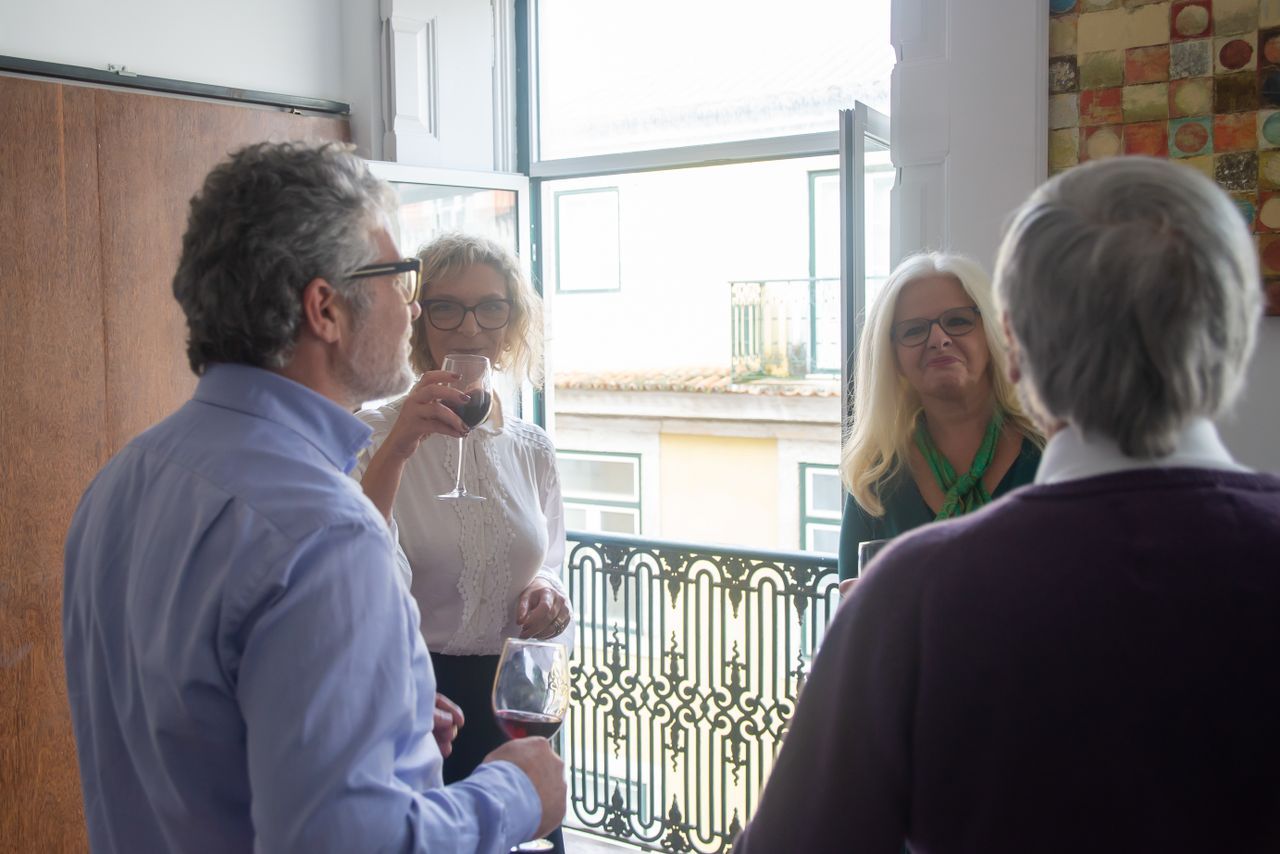
A typical event might take place in a hotel function room, a restaurant with a private dining area, a community hall, a wine bar, or outdoors in a park. The lighting tends to be reasonable. The music, if present, is background-level. The dress code is usually smart-casual — no one is overdressed, and overdressing would feel out of place.
The people who attend tend to be ordinary. Divorced, widowed, or long-single. Nervous, hopeful, mildly sceptical, or just curious. The mix is rarely glamorous or intimidating. Most attendees are doing exactly what you would be doing: showing up despite some uncertainty, hoping the experience is pleasant, and managing a mild internal monologue about whether they belong.
What varies most between events is the degree of structure. Some are highly organised with timed rotations and conversation prompts. Others are simply a room full of single people with a drink in hand and no instructions. The structured formats tend to feel less awkward for newcomers because they remove the burden of initiating conversation from scratch.
Common Formats and How They Work
Speed Dating
Speed dating for over 50s usually involves 10-20 short conversations (3-5 minutes each) with a rotation bell or timer. You sit across from someone, talk until the signal, then move to the next person. At the end, you mark which people you would like to hear from again. If both parties mark each other, the organiser shares contact details.
What it feels like: fast, slightly surreal, and tiring — but less painful than most people anticipate. The time limit means no conversation outstays its welcome. The worst interactions are simply brief. The structure removes the burden of approaching strangers, which many attendees appreciate.
Practical notes: groups are typically age-banded (50-65, 55-70). Events cost £15-40 depending on venue and organiser. Most last 2-3 hours including a social break halfway through. You do not need to be witty or charming — you need to be pleasant and present for three minutes at a time.
Singles Walks and Outdoor Events
Singles walks are lower-pressure than seated formats. A group of 10-25 people meets at a designated point and walks a planned route together — usually 3-6 miles at a moderate pace. Conversation happens naturally as you fall into step with different people along the way.
What it feels like: more like a group outing than a dating event. The physical activity gives your body something to do, which reduces the self-consciousness that seated events can amplify. You talk to several people without needing to formally approach anyone. The end of the walk provides a natural exit point.
Singles Dinners and Supper Clubs
These involve a group of single people (usually 8-16) sharing a meal at a restaurant. Some rotate seating between courses; others keep a fixed arrangement. The dinner provides conversational scaffolding — food, wine, the venue — without the rapid-fire intensity of speed dating.
What it feels like: closer to a normal social dinner than a dating event. The smaller group size means you have longer conversations with fewer people. The trade-off is less variety and more pressure to sustain conversation with your immediate neighbours for the full evening.
Activity-Based Mixers
These include cooking classes for singles, wine or cocktail tasting, art workshops, quiz nights, or games evenings. The activity provides a shared focus and removes the need to generate conversation topics from nothing.
What it feels like: the most natural format for people who dislike evaluative social energy. The activity is the reason you are there, and connection is incidental. These tend to attract people who are socially comfortable but prefer structure over open mingling.
How to Prepare Without Overthinking
Preparation for a singles event is mostly about managing your own expectations rather than perfecting your presentation.
What to wear. Smart-casual works for nearly every format. Something you feel comfortable in and would wear to dinner with friends. If you are uncertain, the guide to what to wear on a first date without overthinking applies equally here. The principle is the same: dress for your own comfort, not to impress strangers.
Arrival. Arriving alone is the norm — most attendees do. If that feels difficult, some organisers allow you to bring a friend (check beforehand). Arriving slightly after the stated start time often means you walk into a room where others have already settled, which can feel less exposed than being one of the first.
Conversation. You do not need prepared topics or witty openers. At structured events, the format generates conversation. At unstructured ones, asking someone what brought them to the event is the simplest and most natural starting point — because everyone there has a version of that answer ready.
Mindset. The most useful reframe is this: you are going to observe, not to succeed. Treating the event as information-gathering rather than partner-hunting removes most of the pressure. You are finding out what these events feel like, not auditing every person for romantic potential.
Practical checklist:
- Confirm the venue, format, and dress code beforehand
- Eat something before you go (hunger amplifies anxiety)
- Bring cash for a drink if it is not included
- Know how long the event lasts and when you can leave
- Give yourself permission to leave early if you need to — that is always an option
The Emotional Reality of Attending
The part that most event-organiser websites do not discuss is the emotional texture of attending. They describe formats and success stories. They rarely describe how the event feels in the room.
Evaluation pressure is real. Even at low-key events, there is an undercurrent of mutual assessment. People are noticing each other. You are being noticed. That awareness creates a specific kind of self-consciousness that is different from ordinary social settings — and it is worth knowing about in advance so it does not take you by surprise.
The first ten minutes are the hardest. Walking in, finding the space, deciding where to stand or sit, scanning the room — this is the peak of discomfort for most people. Once the event structure begins, the pressure distributes and the self-consciousness usually softens.
Mixed feelings are normal. Many readers describe leaving their first event feeling a combination of relief, mild disappointment, and quiet pride at having gone. That combination is standard. It does not mean the event failed or that you performed badly. It means you did something unfamiliar and your nervous system is processing it.
You may not enjoy it — and that is legitimate. Some people attend their first singles event and find the format suits them. Others find it genuinely uncomfortable and decide it is not their path. Both responses are valid. If you are still rebuilding basic social confidence, the evaluation layer of singles events may feel like too much too soon. That does not mean you are failing at dating — it means the setting does not match where you are right now.
One reader described it this way: “I went expecting to hate it and left thinking, well, that was fine. Nobody was terrible. Nobody was perfect. I had three pleasant conversations and one awkward one. I went home and felt oddly calm about the whole thing.”
What Happens Afterward
The post-event experience varies by format.
After speed dating: the organiser contacts you within 24-48 hours with any mutual matches. If someone you liked also liked you, you receive their contact details. If not, you hear nothing — which can feel anticlimactic but is also clean. There is no ambiguous rejection to interpret.
After walks and dinners: follow-up is less structured. If you connected with someone, you may exchange numbers directly during the event. If you did not, the moment passes. Some organisers run repeat events with overlapping attendees, which creates a second chance without requiring you to pursue it.
After activity events: these are the most likely to produce ongoing social contact (not necessarily romantic) because the activity itself provides a reason to return next month. Connection builds across repeat attendance rather than requiring a single decisive interaction.
Realistic expectations for follow-up:
- Most speed-dating attendees get 0-3 mutual matches per event
- Not every match leads to actual contact or a meeting
- Most post-event conversations do not lead to a second meeting
- The process is cumulative — attending once tells you very little about the format’s potential
If an event produces a connection that leads to meeting one-to-one, the guide to first dates for mature singles covers how to approach that next step. And if you find yourself wondering about physical affection — when a hug becomes natural, how to read whether touch would be welcome — the guide to physical affection in new relationships after 50 addresses that transition directly.
When Singles Events Work — and When They Don’t
Singles events work best for people who:
- Are comfortable with short, low-stakes social interaction
- Prefer structured settings over open-ended socialising
- Want to expand their exposure to single people beyond their existing circles
- Are willing to attend more than once before forming a judgement
- Treat events as one option among several, not as the solution
They tend to frustrate people who:
- Strongly dislike being evaluated or sizing others up
- Find groups of strangers draining rather than energising
- Expect each event to produce a meaningful connection
- Are looking for deep conversation rather than brief exchanges
- Would rather build connection slowly through repeated contact in ordinary settings
If you attend two or three events and consistently feel worse afterward — not just tired, but deflated, exposed, or discouraged — that pattern is worth trusting. Singles events are one channel for meeting people, not a compulsory step. For readers who find the evaluation pressure uncomfortable, meeting people through activities, classes, and groups offers an alternative path where connection builds through familiarity rather than assessment.
The honest summary: singles events expand your exposure to single people your age in a concentrated, time-efficient way. They do not reliably produce romantic connection from any single attendance. Their value is cumulative and probabilistic — the more you attend, the more faces you encounter, and the more likely you are to find someone worth a second conversation with. Whether that trade-off suits your temperament and energy is a genuinely individual question.
Frequently Asked Questions
What actually happens at a singles event for over 50s?
It depends on the format. Speed dating involves timed short conversations with a rotation. Singles walks are group outings where you chat as you walk. Dinner events are shared meals in small groups. Activity events (cooking, wine tasting, quiz nights) provide a shared focus. All are designed for people attending alone, and the atmosphere is usually calmer and more conversational than younger-demographic events.
Do I have to talk to everyone at a speed dating event?
Yes — the format involves rotating through all participants. But each conversation is only 3-5 minutes. You do not need to be impressive or witty. You need to be present and reasonably friendly for a few minutes at a time. The worst conversations are simply short.
What if I feel too anxious to go alone?
That feeling is common and does not mean you are unready. Some events allow you to bring a friend — check with the organiser. Arriving slightly after the start can reduce the exposed feeling of walking into an empty room. If the anxiety feels unmanageable rather than merely uncomfortable, focusing on rebuilding general social confidence first may be a more proportionate step.
Are singles events mainly for people seeking serious relationships?
The mix varies. Some attendees want long-term partners. Others want companionship. Some are genuinely just curious. Most events do not require you to declare what you are looking for. You can attend without needing to commit to a particular goal — observing and deciding afterward is entirely reasonable.
How many events should I try before deciding they aren’t for me?
Two or three gives you a fairer picture than one. A single event is heavily influenced by who happens to attend that night. The second or third attendance tells you more about whether the format itself suits you, separate from the random variation of individual events.
A Manageable Starting Point
If you are going to try a singles event, choose the format that matches your social preferences. If you like structure and brevity, try speed dating. If you prefer movement and low pressure, try a singles walk. If you want conversation and shared experience, try a dinner or activity event.
Go once with the goal of observing rather than succeeding. Notice how the format feels, how the atmosphere sits with you, and whether you would attend again. That is the only useful measure after a first event — not whether you met someone, but whether you would go back.