Helen is a pseudonym. Her story is based on a conversation and on the published accounts linked below, which describe closely similar experiences: Patricia Hunt Holmes’s travel diary (widowed at 68, first solo trip to France), a widow’s account of her disastrous first trip three months after her husband’s death, and YorkshireRose on the Sue Ryder bereavement forum, who returned to Lanzarote alone eight months after losing John. We also drew on accounts from the Rick Steves Travel Forum. Details have been changed to protect privacy. A 2020 National Academies report found that approximately 43% of adults over 60 report feeling lonely. A 2024 study in Royal Society Open Science found that emotionally intense shared experiences between strangers produce social bonding significantly faster than routine shared activity. We are not travel agents or therapists. If loneliness is accompanied by depression or loss of function, a GP is the right starting point.
Helen booked the trip on a Tuesday in March. She had been widowed seven months. Her husband David died of a stroke in August, quickly, in the kitchen, while she was upstairs sorting laundry. She found him on the floor by the fridge. That detail is not relevant to the trip she booked, except that it is relevant to everything she did for the next year, and she could not separate the two.
Months later, describing the week to a friend who was considering something similar, she would say: “The worst part was the twenty minutes in the lobby before anyone else arrived. Everything after that was manageable.” But that was the edited version. The truth had more texture, and she knew it even while giving the simpler answer.
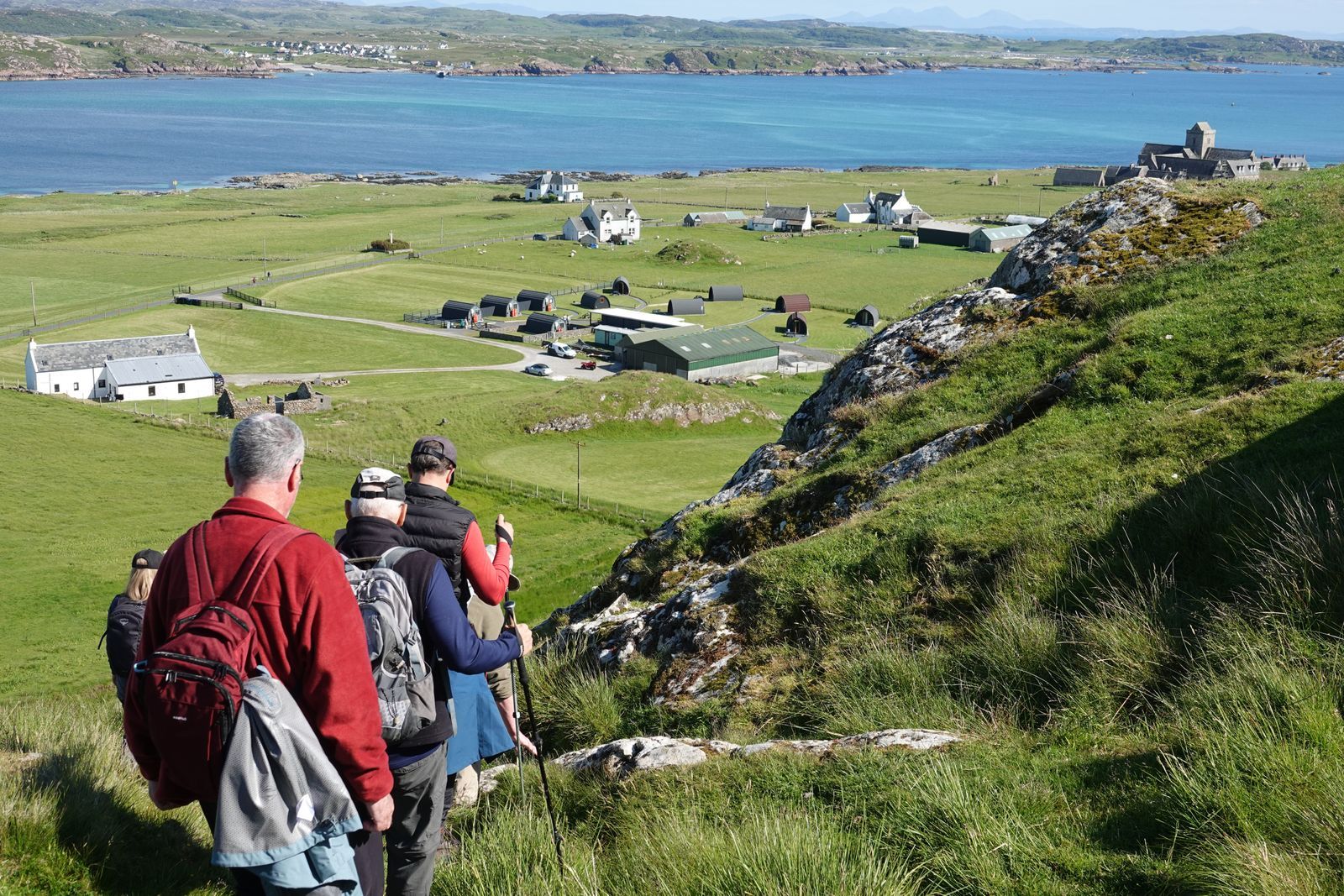
She chose a walking holiday in the Lake District. Seven days, fourteen people, three moderate hikes per day with pub lunches. The company’s website said “singles and solo travellers welcome.” She noticed that phrasing, the way it placed “singles” first. She paid the £240 deposit on a Wednesday morning before her daughter’s weekly call, as though getting it done before 9am made it less of a decision.
She was 63. Singles travel after 60 was not a phrase she would have applied to herself even six months earlier. She still thought of herself as married. Not to David, who was dead, but to the shape of a life built around someone else’s schedule, someone else’s preferences about holidays, someone else’s habit of booking the same cottage in Pembrokeshire every June. She did not know what she wanted from a walking trip with strangers. She knew what she did not want: to be at home on a Saturday in May, watching the garden David planted come back without him.
One widow, writing on a bereavement forum eight months after losing her husband John, described the same calculus. She booked the same Lanzarote apartment complex they had always visited together. Her family were proud of her. Her son said she could fly home early if she needed to. She nearly turned back at the airport, held up by what she called “a mixture of bravado and stupidity.” She went because, she wrote, “there’s no John at home to fuss around me and spoil me” and staying felt worse than going. She cried the first morning. She also noticed, for the first time, how many other solo people “of a certain age” were at the resort. She had never looked for them before.
The group does not need you to be interesting. It needs you to be present.
She did not know that yet. She learned it on a hillside, ungracefully.
The Word That Almost Stopped Her
The problem was “singles.” Not the trip, not the cost, not the walking, not the strangers. The word.
Helen tried to explain this to her friend Nadia over lunch at a cafe near the high street. She said she had booked a walking holiday. Nadia said how lovely. Then asked who with. Helen said a group, which was true. Nadia asked what kind of group. Helen said people who travel alone. She left out the word and felt the omission like a small lie sitting between the soup bowls.
She knew why she left it out. “Solo traveller” sounds like a choice. “Singles” sounds like a condition. One implies independence. The other implies something missing. She was not sure which she was, honestly. Both, probably. She wanted the trip and she also wanted someone to have already been going with her, and those two things could not both be true, so she chose the trip and tried not to examine the wanting too closely.
One woman, widowed at 53, described joining her first Road Scholar programme in Arizona: “I began at Yavapaí, widowed and lonely but anxious to travel and learn.” What struck Helen when she read that line later was “anxious to travel and learn.” Not “anxious to meet someone.” The distinction mattered. It was the distinction Helen had been trying to make to Nadia over soup, badly, without finding the right sentence.
On a Rick Steves forum thread, a daughter wrote about her 65-year-old widowed mother: “She is concerned about being the only ‘single one’ and that these tours are the typical stereotype of a ‘bunch of old people on a bus.’” Helen recognised both fears. The first was about exposure. The second was about dignity. Neither turned out to be the actual problem once the trip started.
On the trip itself, nobody said “singles group.” Nobody even said “solo travellers.” Ros, the tour leader, said “the group” and “everyone” and “us.” The word that had kept Helen awake at 2am existed only on the website. In the minibus to Catbells it was already gone.
If even a full week feels like too large a commitment, a first solo weekend trip is a way to test how you feel alone in an unfamiliar place before spending £1,400 on strangers.
The First Evening
Helen arrived at the hotel in Keswick twenty minutes early and immediately wished she hadn’t. The lobby was empty except for a man in walking boots reading a leaflet about Derwentwater. She sat near the window and pretended to do something on her phone. Her phone had three unread messages from her daughter, all practical, none requiring answers.
When three women came in together, already laughing about something, Helen felt her stomach drop. They knew each other. She was the odd one out. This turned out to be wrong. They had met forty minutes earlier at Oxenholme because of a late connection. But Helen spent twenty minutes believing she was the only true stranger in the building, and that twenty minutes was bad enough to make her consider the car park and the drive home.
Dinner was at a long table. Ros seated people with the quiet skill of someone who does this every week. Helen ended up between Clive, a retired teacher from York who mentioned within three minutes that his wife had left him, and Suki, a small woman who said almost nothing through the starter and then turned out to have been to thirty-six countries. Suki ate her bread roll in pieces, breaking off small bits and placing them on the side plate. Helen noticed this and did not know why.
There was also a man named Graham at the far end who laughed too loudly and told a long story about a hiking trip in the Pyrenees that seemed designed to establish that he had done harder things than this. Helen disliked him within an hour, which felt ungenerous and also completely fair.
The dinner was not good. Not the food, which was fine. The social experience of it. The low effort of fourteen people being pleasant at each other without knowing what was permitted. How much to reveal. How much to ask. Whether this was a holiday or an audition. Helen went to her room at half nine and sat on the bed for ten minutes doing nothing. Then she brushed her teeth and thought: I did not enjoy that. And also: I did it. Those were not the same thing, but the second one carried enough weight to keep her from packing in the morning.
What Nobody Mentions About Day Two
Research on social bonding suggests that shared emotional intensity, not just proximity, is what accelerates connection between strangers. The experience needs to be novel, slightly uncomfortable, and happening to everyone at the same time. Walking uphill in sideways rain with people you met yesterday is almost perfectly calibrated to produce that effect.
Helen did not know this on Monday morning. She knew that breakfast was easier than dinner had been. People were sleepy. The conversation was about boots and waterproofs and whether the weather would hold. Nobody asked anyone anything personal. The relief of that, the blessed triviality of talking about socks, was significant.
The first hike was Catbells. Ros described it as a warm-up. It involved a scramble near the top that was steep enough that Helen had to use her hands. At one point her left foot slipped on wet rock and Suki, who was just ahead, turned and offered her hand without saying anything. Helen took it. On flat ground in a restaurant, that would have been strange. On a wet hillside it was just obvious. She said thank you. Suki said “the rock’s awful there” and kept walking.
Sarah Greaves-Gabbadon, who joined a Road Scholar hiking trip through the Austrian Alps with a group of nineteen people aged early-50s to mid-70s, planned to hang back and avoid conversation. By lunchtime on day one she found herself walking beside another solo traveller in what she called “companionable silence.” She had expected to dislike the group format. She did not expect that proximity without obligation would feel like anything at all.
Helen found something similar but would not have called it that cleanly. What she found was that by Monday afternoon she had stopped monitoring herself. She had walked beside Clive for forty minutes saying nothing. She had sat on a stone wall eating a sandwich near Suki and not felt the need to fill the space with talk. She had laughed at something Ros said about the weather without immediately checking whether her laughter sounded natural, or forced, or too eager. She was just there. Not performing “doing well.” Not performing “brave widow.” Just there, slightly out of breath, slightly damp, eating a cheese sandwich.
The unexpected thing, which she could not have predicted and which no amount of reading trip reviews would have told her: admitting weakness helped more than projecting ease. When she said at the summit that her knee was complaining, three people immediately told her about their own knees. When she confessed at dinner that she had nearly cancelled the morning of departure, Clive said “I sat in the car park for ten minutes before I came in.” Graham, to his credit, said “I told my son I was going to a photography workshop.” Everyone laughed. Even Helen laughed at Graham, which made her feel slightly better about having disliked him the night before.
Wednesday
By Wednesday something had shifted that Helen could not quite locate. Not friendship. It was too early for that and she did not trust it. More like the removal of a specific tension. She no longer walked into the breakfast room calculating where to sit. She had a seat. Next to Suki, across from Clive, within earshot of Ros but far from Graham’s end of the table. She had not planned this. It had assembled itself by repetition.
She called her daughter on Tuesday evening and Sarah asked how it was going. Helen said fine, and then paused, and then said “there’s a man who talks too much about the Pyrenees.” Sarah said “oh god” and they both laughed. It was a small thing. But Helen noticed afterward that she had mentioned a person from the trip by characteristic rather than saying “it’s lovely” or “the weather’s been mixed,” which were the two phrases she had been using on the phone for months to mean “please do not ask me how I actually am.”
On Wednesday afternoon the group walked to Buttermere in rain. Not drizzle. Proper rain, the kind that finds the gap between your collar and your neck. Helen’s waterproof was not as waterproof as she had believed. By the time they reached the pub she was soaked from the chest down and her left boot had developed a squelch. Suki’s hood had blown off three times. Clive had stopped talking entirely, which Helen had initially worried about until she realised he was just cold and concentrating on the path.
At the pub, someone ordered chips for the table without asking and everyone ate them. Helen’s hands were too cold to hold her tea properly. She wrapped both hands around the mug and watched the rain through the window and felt, for maybe the first time that week, uncomplicated pleasure. Warmth after cold. The absence of any requirement to feel something about it. She did not think about David or about courage or about whether the trip was working. She thought about chips and tea and the fact that her left sock was soaked through.
That evening, though, she lay in the bath at the hotel and cried. Not from sadness exactly. From something she could not parse. The day had been good and the crying had nothing to do with the day being bad. She thought it might be about David, but it was not specifically about David either. It was more like: a door had opened that she had not finished being ready to walk through, and the draft coming through it was not warm or cold, just unfamiliar. She did not mention this to anyone. She went to dinner with slightly red eyes and nobody noticed, or if they did they said nothing, which was the same thing.
Patricia Hunt Holmes, widowed at 68, described a similar ambush during her first solo trip to Provence. She was having a good evening, sitting with friends at a restaurant, when a couple got up to dance. “I was acutely aware of the absence of my husband,” she wrote. The trip was not ruined. The evening was not ruined. But the absence arrived uninvited, as it does, in the middle of something otherwise pleasant. Helen would have recognised that. The grief does not wait for a bad day. It visits the good ones too, sometimes more sharply.
What She Brought Home
Helen came back to her house on a Sunday evening. She put her bag in the hallway and stood in the kitchen and the house was exactly as she had left it. The sink. The garden through the window. David’s wellies still by the back door because she had not moved them and now it had been so long that moving them would be a decision rather than a tidying.
The trip had not fixed anything. She was still widowed and still alone in her kitchen at 7pm on a Sunday. But something had shifted, and it took her about a week to understand what. The shift was not emotional. It was evidential. She had been in a group of strangers and not fallen apart. She had not needed to explain herself. Silence between two people had been comfortable even when one of them was her. She could dislike someone and enjoy someone else and feel neutral about the rest and none of it required anything beyond showing up. That ordinariness was the thing. Not a breakthrough. Just proof that the world still had rooms she could walk into.
She stayed in touch with Suki. They texted photographs of their gardens. Suki sent her a picture of a plant she could not identify and Helen spent twenty minutes looking it up and texted back “Astrantia.” That was the nature of it. Not intimate. Not frequent. A warm, loose thread that required almost nothing to maintain and gave back slightly more than it cost. She did not stay in touch with anyone else, including Clive, which surprised her slightly. She had liked him on the trip but found that without the walking and the shared table he did not quite translate into her ordinary life. His texts came and she replied and then neither of them wrote again and that was fine.
There was also a woman named Pat who Helen never spoke to properly. Pat was quiet in a different way from Suki, more closed than reserved, and she walked alone every day by apparent preference. On the last morning Pat said to Helen at breakfast, without preamble, “I nearly didn’t come either. My reasons are different from yours but the nearly-not-coming is the same.” Helen did not know what Pat’s reasons were. She did not ask. Pat did not offer anything further and they did not exchange numbers. Helen still thinks about that sentence sometimes. She does not know why it stayed.
She booked another trip four months later. Cotswolds, different company, five days. The second booking cost her almost nothing emotionally. The first had cost her the admission that she wanted not to be alone, which at 63 and seven months widowed had felt like betraying something she could not name. The second was just a holiday.
The honest thing to say is that not everyone’s story goes this way. Helen knows a woman from the trip, a woman named Diane who sat at Graham’s end of the table and seemed perfectly pleasant, who told Ros on day four that she was not enjoying herself and wanted to go home a day early. Ros arranged it without fuss. Diane left on Thursday afternoon and nobody spoke badly of her.
Another widow, writing about her own first trip three months after her husband’s death, described something worse than disappointment. She had booked a weekend knitting retreat in a city they used to visit together. She went to the German sausage factory and the European bakery that had been part of their routine. The time alone was, in her words, “excruciating.” She had expected it to feel like her old business trips and forgotten the one thing that made those bearable: she could call her husband each evening and share what she had been up to. “I cried in that hotel room and realized a few things,” she wrote. “Travel would never be the same again. I would never have him with me to make those decisions together of where to eat, which route to take.” She called the trip both “impossible and necessary.” It took her roughly ten more trips before solo travel felt like capability rather than endurance.
Helen’s trip was not like that. It was a group, not solo. It was seven months, not three. She had walking and pub lunches and Suki’s quiet company and Ros managing the logistics. The structure carried her where willpower alone might not have. But she is aware, in the honest way you become aware of things you narrowly avoided, that timing and format made the difference. Three months earlier, alone, she might have been the woman crying in the hotel room. She does not know. She is glad she did not find out.
If you are at the stage where the practical questions matter, the practical guide to travel groups for singles over 50 covers how to choose. If you went and want to keep the connections alive, the guide to turning a singles trip into lasting connections covers the follow-up.
But if you are where Helen was in March, all of that is premature. The only question that matters at that stage is whether you can tolerate the first evening. Not enjoy it. Tolerate it. Everything after that assembles itself, or it doesn’t, and either way you come home knowing something you did not know before you left. If even a week away feels too large, a local walking group offers the same mechanism — repetition, shared activity, no pressure to perform — at a smaller scale and a lower threshold.
Frequently Asked Questions
Is it awkward joining a travel group alone at 60?
The first few hours, yes. You arrive not knowing anyone, the lobby feels exposed, and you wonder whether everyone else is more confident than you are. By dinner, the awkwardness is shared. First-evening nerves are universal in these groups, and most people have the same quiet relief when they realise nobody is watching them more closely than anyone else. By day two, the activity provides enough structure that social interaction becomes incidental rather than something you have to generate. Most people report that the anxiety beforehand was significantly worse than the experience itself.
What happens on the first evening of a group trip?
A welcome meeting, usually brief and logistical, followed by a group dinner. The dinner is where most of the social work happens, and where tour leaders earn their fees by managing seating, introductions, and the invisible task of making sure nobody sits alone at the end of a table. It is rarely fun in the way dinner with friends is fun. It is more like a tolerable threshold you cross once and then do not have to cross again.
Do people actually stay friends after a singles travel group?
Some do. The realistic conversion rate is modest: most people form one lasting connection per two or three trips, not one per trip. The intensity of shared experience makes initial bonding easy; sustaining it afterward requires deliberate follow-up that many people do not do. If you return with one person you text occasionally and one genuinely warm memory, that is a good outcome. Expecting a ready-made friendship circle from a single trip sets you up for disappointment.
What if you don’t click with anyone on the trip?
This is a real possibility and not a failure. A group of fourteen strangers will contain a range of temperaments. If the overall group energy does not match yours, focus on the one or two people whose pace is similar, or enjoy the solitude within the group structure. Walking alone within a group is entirely acceptable and nobody will interpret it as distress. The trip is still valuable even if you come home without a contact saved in your phone: the evidence that you can do it is worth something on its own terms.