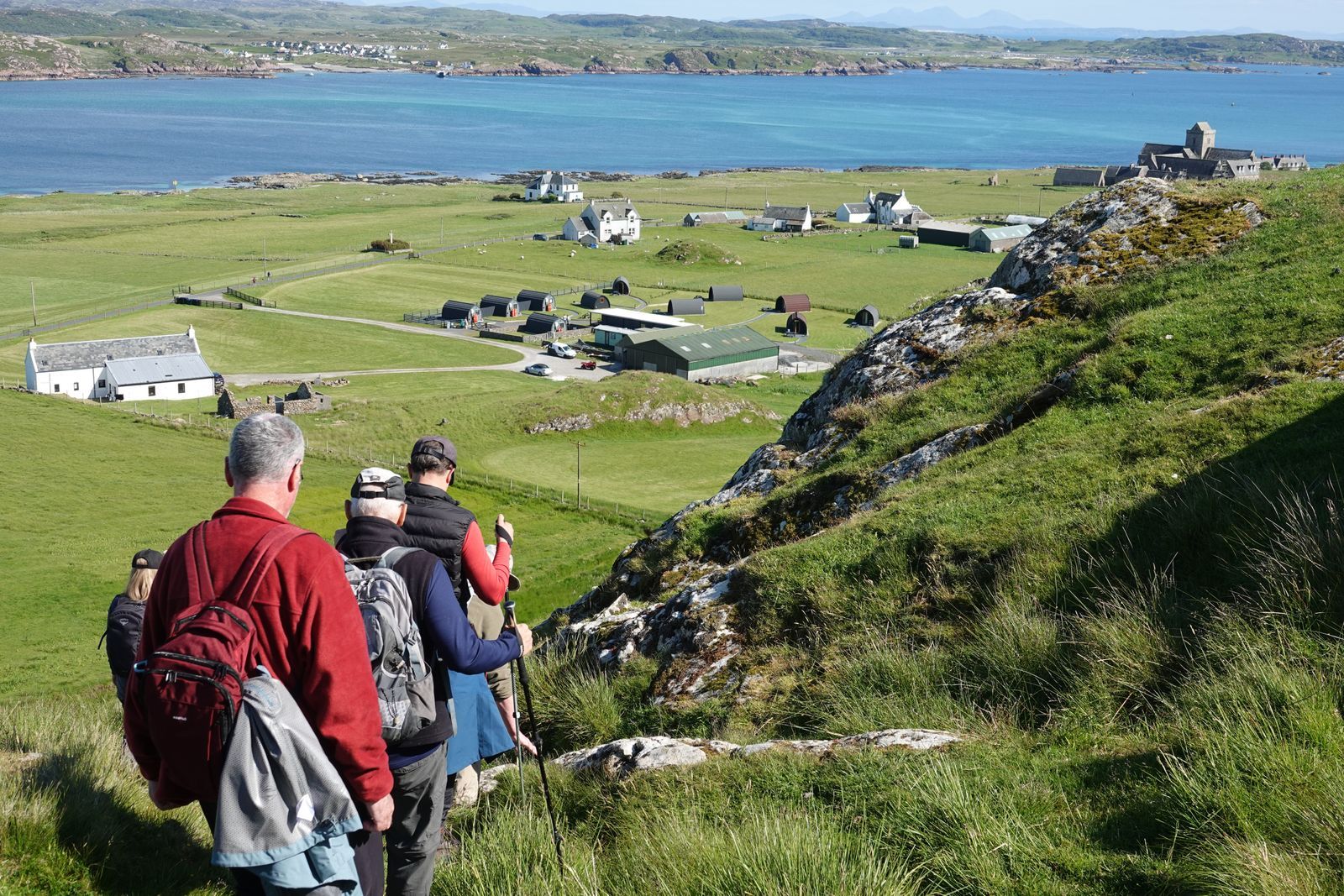
Margaret is a composite character. Her story draws on published first-person accounts from walkers who joined group walks alone after 60, including Molly Morrison’s account of a guided walking trip in Tasmania, Sally’s description of joining Ramblers on Dartmoor during lockdown, and conversations shared by readers who found social connection through regular walking groups after retirement. A 2021 longitudinal study found that older adults who walked regularly with peers showed greater improvements in motivation, self-efficacy, and physical capacity than those who walked alone. A 2025 randomised pilot study comparing walk-and-talk therapy with conventional indoor therapy found that the outdoor side-by-side format reduced social performance pressure and facilitated disclosure in men with low mood. We are not therapists or fitness instructors. This is observational — a description of how one woman experienced the ordinary process of joining a walking group, not a prescription to do so.
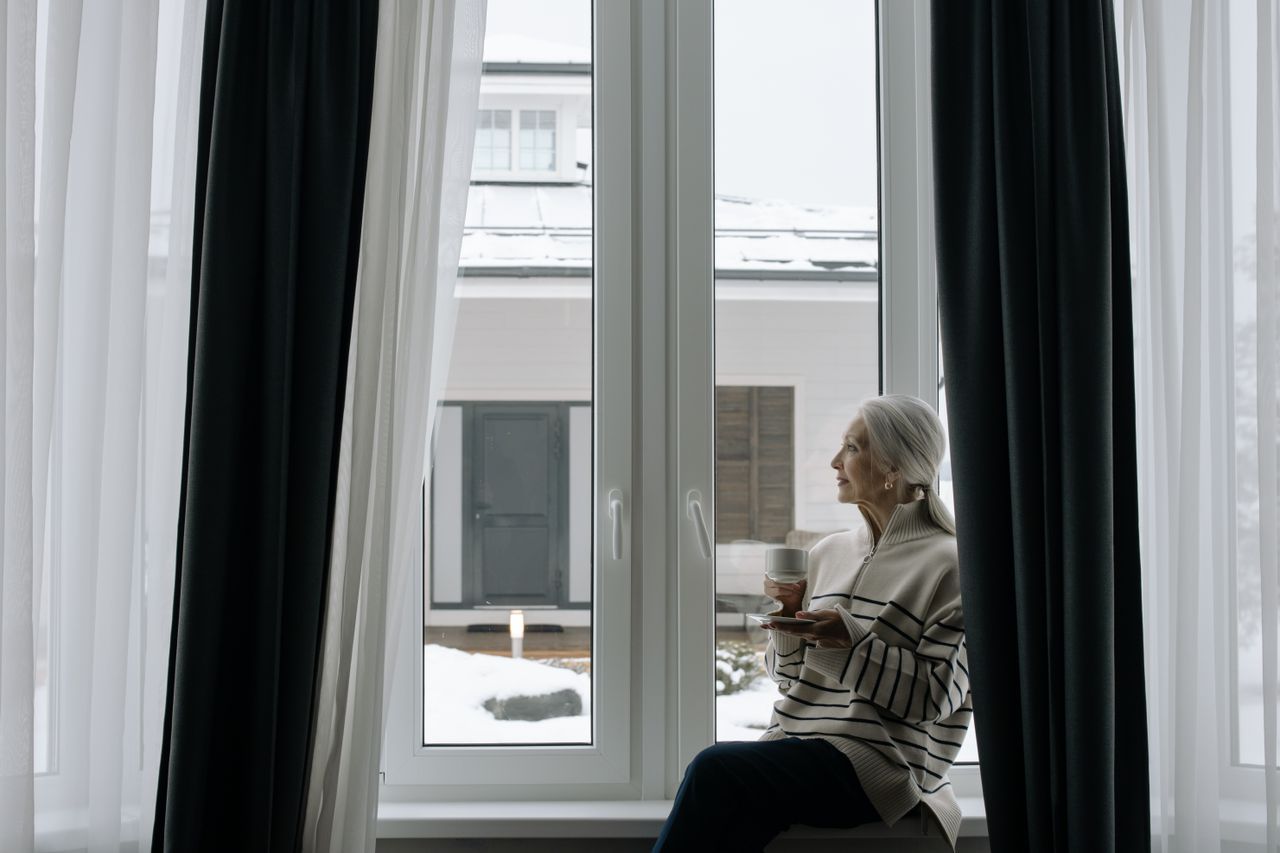
Margaret retired at 63 from a council planning office where she had worked for twenty-two years. The social part of retirement surprised her. Not the loneliness — she had expected that, vaguely, the way you expect rain in March without packing an umbrella. What surprised her was the specific shape of it: she still saw people, still had friends, still spoke to her sister on Sundays. But something had shifted. The incidental contact was gone. The colleagues she had never chosen but spoke to daily, the woman at the coffee shop who knew her order, the brief exchanges that added up to feeling known. Those had vanished overnight and left behind a life that looked full but felt oddly thin.
She wanted to meet people after 60 who were not already in her life. She did not know how to say that clearly, even to herself, because it sounded like a confession rather than a practical problem.
The people you meet while walking are the people you keep meeting — that repetition is the entire mechanism. And it is through that repetition that conversation moves past small talk into something real — not through a single breakthrough, but through accumulation.
She did not understand that yet. She would learn it over four Tuesdays, ungracefully.
The Word She Avoided
The problem was not finding a group. Meetup showed her seven within driving distance. Her local council leisure programme listed two. Her GP surgery had a leaflet pinned to the noticeboard in the waiting room: “Walk and Talk, Tuesdays 10am, Riverside Park.” She had noticed it six months earlier at a blood pressure appointment and thought, briefly, that’s for lonely people, and then felt ashamed of the thought, and then forgot about it.
Six months later she remembered it and the shame had not gone anywhere. It had just got quieter, the way discomfort does when you stop looking at it directly.
The real barrier was not logistics. It was what joining implied. Walking groups were for people who needed help meeting other people. She had never been that person. She had always been surrounded — at work, at family things, at the pub quiz she stopped going to when Martin moved away. Joining a structured group felt like admitting that the social life she had built over decades had not survived the removal of one element: a workplace. And that admission felt like a diminishment she was not ready for.
Molly Morrison, who joined a guided walking trip in Tasmania without her partner, described something adjacent: “I’m the kind of person that doesn’t even like to call up Telstra — I’ve got to hype myself up to do that.” For Molly it was introversion. For Margaret it was pride. The resistance looked different but the cost of overriding it felt similar. You had to do the thing before you knew whether the thing was beneath you.
Margaret told her daughter she was thinking of joining a walking group. Her daughter said “oh that’s great, Mum” with a brightness that made Margaret wish she hadn’t mentioned it. The encouragement made it sound like a project — like occupational therapy for retirement, like something her daughter would tell friends about at dinner (“Mum’s joined this lovely walking group, she’s making real progress”). Margaret did not want to be someone making progress. She wanted to be someone with a normal Tuesday that happened to involve other people.
She signed up online on a Wednesday evening after two glasses of wine. The confirmation email arrived immediately and she closed the laptop before she could read it.
The First Tuesday
She arrived twelve minutes early because she was afraid of being late and having to walk into an already-formed cluster of people. The car park at Riverside Park held six cars. One woman was sitting in a blue Nissan eating a banana. Two men stood near the information board in walking boots that looked expensive and recently purchased. Margaret sat in her car with the engine off and watched them through the windscreen and thought: I could leave. Nobody knows I am here.
She did not leave. She got out because staying in the car past 10am would have required a decision, and getting out required only inertia plus the fact that she had already put her walking shoes on at home.
The group was eleven people. A woman called Jan with a lanyard and a clipboard said “are you new?” and Margaret said yes and Jan said “lovely, just stay in the middle, we go about three miles, it’s flat.” That was it. No icebreaker. No circle of introductions. No please-tell-us-something-interesting-about-yourself. Just a clipboard tick and a direction to start walking.
The relief of that was enormous.
For the first twenty minutes Margaret walked alone within the group. Alone in the sense that nobody spoke to her directly, though she was surrounded by the murmur of other conversations — something about a grandchild’s school, something about a knee operation that had been delayed, something about the swans on the canal. She walked at a pace slightly faster than the back of the group and slightly slower than the front, which placed her in a no-man’s-land that felt both invisible and safe.
Sally, who joined Ramblers on Dartmoor knowing nobody in the area, described her first walk as feeling like “being parachuted into an alien country.” Six strangers in a socially distanced circle, making introductions on the moor. A fierce rainstorm hit on the return leg and everyone laughed, which Sally noted with surprise — she had expected to hate it, expected to confirm that she was fine alone and did not need this. “I hadn’t realized the degree of loneliness I felt,” she wrote, and the sentence carried an edge of irritation at herself for not knowing sooner. Margaret had not reached laughter yet. She was still at the stage of not leaving.
Around the forty-minute mark, a woman with grey-blonde hair and a terrier fell into step beside her. The woman said “first time?” and Margaret said yes and the woman said “me too. Well, third time. But the first two I nearly didn’t come back.” She said her name was Denise and that she had found the group through her physio and that the terrier was called Basil and that Basil was the reason she was here at all because he needed walking and she needed not to walk alone anymore, and that those two facts had aligned in a way that gave her permission to come.
Margaret listened. She did not have to generate conversation. The path was narrow enough that they walked single file for a stretch, and the silence that created did not feel awkward. It felt like punctuation.
What Happens When You Walk Beside Someone
There is something specific about walking that most articles about “meeting people” never mention. The orientation.
When you sit across from someone at a coffee morning or a book group or a speed-dating table, you are face to face. You are performing. Your expressions are visible, your discomfort is readable, and the silence between sentences carries weight. You feel watched, even when nobody is watching particularly.
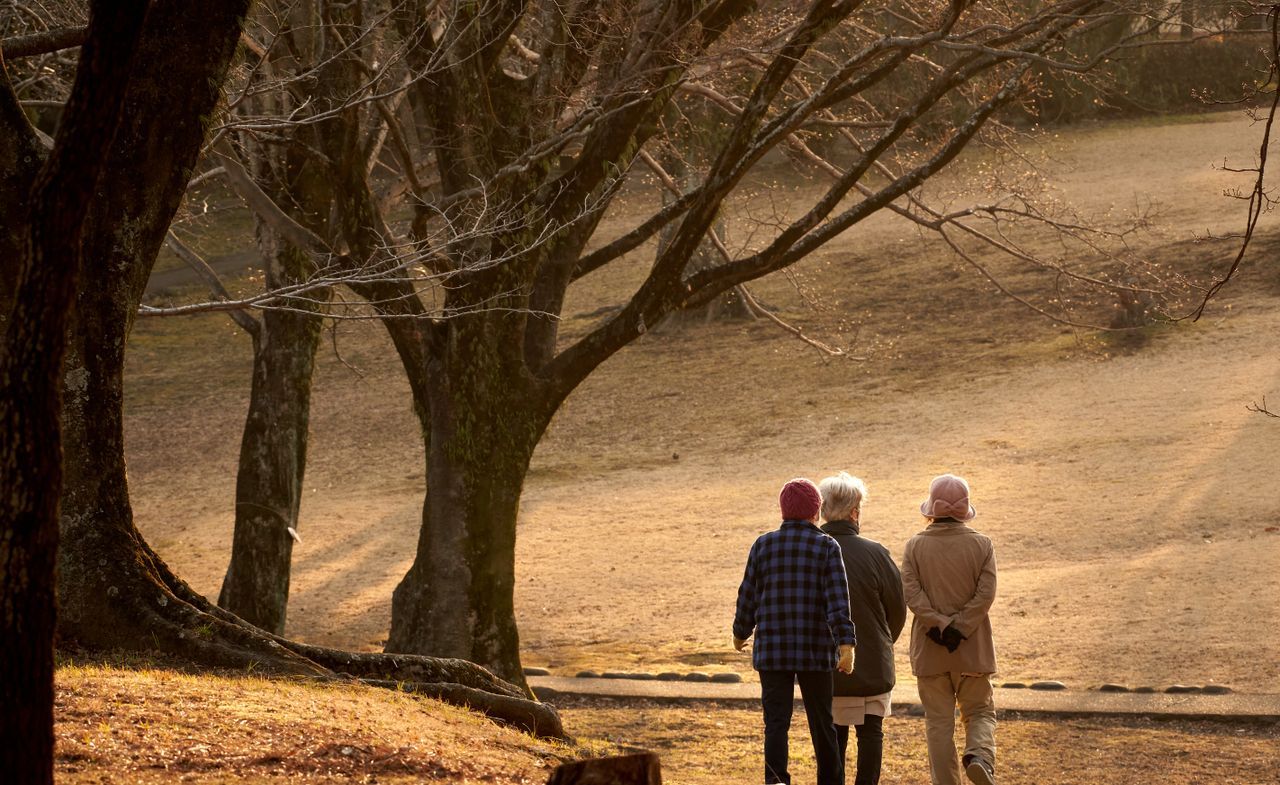
When you walk beside someone, you face the same direction. You look at the path, the trees, the dog ahead, the canal. Your peripheral vision includes the other person but your focus does not. Silence is not empty — it is filled by footsteps, birdsong, the sound of your own breathing on an incline. A pause in conversation is just a pause. You do not have to fill it with eye contact or a question. You can let it last as long as the next bend in the path.
A 2025 randomised pilot study comparing walk-and-talk therapy with conventional indoor therapy found that the outdoor, side-by-side format facilitated greater openness in men with low mood. The researchers noted that reduced face-to-face exposure and the shared focus on the environment appeared to lower the social performance demands that indoor settings create. This is not walking-group-specific research. But it describes the mechanism that Margaret felt without having language for: the path does the work of eye contact, and the walking does the work of a topic.
Molly Morrison described the same thing after her Tasmanian walking trip: “You can walk side-by-side with someone and have a chat with them, or you can drop back or walk on ahead and be completely on your own.” The flexibility is the point. Nobody is trapped in a conversation. You can close the distance or widen it by adjusting your pace. In a coffee shop you would have to make an excuse. On a path you simply walk a little faster, and nobody interprets it as rejection.
Margaret noticed this on her first Tuesday without understanding it. She talked to Denise for about twenty minutes. Then the path widened and Denise sped up slightly to talk to someone nearer the front. Margaret walked alone again, but the aloneness had changed quality. It was chosen rather than default.
Week Three
The second Tuesday she nearly did not go. It had rained all morning. She had a load of washing that would not hang itself. She stood in the kitchen at 9:40 holding her car keys and a mug of tea that was still too hot to drink, and the two objects felt like a vote she had not yet cast. She put the mug down. She drove to the park still slightly annoyed about the washing.
Jan was there again. Denise was there again. Basil the terrier was there. A man she had not noticed the first week, David, fell into step with her near the beginning and said “you came back then” and she said “apparently” and he laughed and said “same. I treat it like a dentist appointment — I don’t decide each week, I just go.” He was wearing a fleece that had a small rip near the collar, and for some reason that detail made her trust him. She could not have explained why. Something about not caring enough to mend it, or caring about other things more.
The third Tuesday was better, in a way that was hard to pin to any single moment. She arrived and Jan said “morning, Margaret” — not “are you new?” She had a name in this place. Denise waved from the bench where she was putting Basil’s harness on. David was already walking. Margaret fell into step beside a woman named Ruth who talked about a planning application near her house — an extension her neighbour was building that was clearly going to block Ruth’s light, and the council had approved it anyway. Margaret had spent twenty-two years processing those applications. She knew exactly what had happened. For six minutes she explained what Ruth’s options actually were, and for those six minutes she felt like herself at work: competent, useful, speaking from knowledge rather than performing sociability. Ruth said “god, you actually understand this” and Margaret said “unfortunately, yes” and Ruth laughed and said “you’re coming next week, I have more complaints.”
The fourth Tuesday, Margaret missed. Her sister phoned at 9:15 about a leak in her bathroom ceiling and by the time Margaret had talked her through calling the insurance company, it was 10:20 and the group had already left. She was surprised by how much the missed week bothered her. Not socially — nobody would have noticed her absence in a group of eleven. It bothered her because the morning felt shapeless without it. She did something she had never done before: she checked the group’s Facebook page to see if they had posted photos. They had not. She closed the tab feeling slightly foolish.
The fifth Tuesday, she arrived and Ruth said “where were you last week?” in a tone that was less concerned and more conversational, the way you ask a colleague about their Monday. Margaret said “family thing” and Ruth said “ah, right, well you missed the heron” and that was it. A small confirming exchange. She had been missed, but only in the way a regular is missed — a brief notation, not a fuss.
Months later, describing the process to a friend who was considering something similar, Margaret would try to compress what happened into something useful. She would say: the first week you survive it, the second week someone remembers your face, the third week you have a name and a loose position in the group, and by the fourth or fifth week it stops being a decision and becomes just Tuesday. But saying it like that made it sound smoother than it was. It left out the missed week, the washing, the Facebook page she checked for no reason. The real version had gaps.
What She Did Not Expect
She expected the walking to feel good. It did. She expected the conversation to get easier. It did, roughly. What she did not expect was the thing she noticed on her fifth or sixth walk: she had started looking forward to the walk not for the people or the exercise but for the specific quality of attention it created. She noticed things. Herons. The way the light sat on the water at different points in the season. A particular oak tree that was losing a branch slowly, across weeks, so you could track it if you were there every Tuesday. Things she would not have noticed walking alone because alone she walked with headphones and a podcast and her own thoughts turning the same grooves.
David pointed at a kingfisher once. Just pointed, said nothing. Everyone looked. Margaret saw it. A bright blue dart over the water, gone in two seconds. On her own she would have missed it. She would have been listening to Radio 4 and thinking about whether to paint the spare room. Instead she saw the kingfisher, and Denise said “smell that — wild garlic” and she smelled it, and for ten minutes she was just walking in a park with other people and not thinking about anything at all. It was such a small thing. She nearly cried in the car afterwards, and she could not have explained why.
She thought later it might have been this: for six months after retirement she had been managing her days. Filling them. Constructing a schedule that would hold her life in shape from the outside. The walking group was the first thing in six months where she was not managing. She was just present. And the relief of that — of not being the project manager of her own existence for ninety minutes — hit her in the car park like something she had not known she was carrying.
What she also did not expect: she did not want more from the group than it gave. She did not want evening drinks, a WhatsApp group, weekend plans. She wanted Tuesday, and Tuesday was enough. She could be known in a specific, limited way and leave the rest of her life untouched by it. That felt selfish for about a week, and then it felt like the sanest boundary she had drawn in years.
What Stayed
After four months, Margaret knew about twelve regulars by name. She had David’s phone number in case of a route cancellation. She and Ruth still talked about planning applications — Ruth’s neighbour had appealed, which gave them material for weeks. She had coffee once after a walk with Denise and Denise’s husband, which was fine but different from the walking version of Denise in a way that took her a few days to place. Denise across a cafe table made more eye contact. Asked more direct questions. The conversation required more of Margaret, and she found she did not enjoy giving more. On the path they could talk or not talk and both versions were fine. In the coffee shop there was nowhere to look except at each other, and Margaret realised she liked Denise best when she did not have to face her. She felt guilty about this for an afternoon, and then decided it was just information.
She did not start a romance. She did not transform her social life. She did not become the kind of person who organises things or hosts or volunteers to lead. She was still mostly private, still mostly quiet, still someone who preferred one good hour of company to an entire social weekend. The walking group had not changed her personality. It had just given her one specific place where her personality was not a problem.
There was a woman called Linda who came three times in Margaret’s second month and then stopped. Jan mentioned her once — “Linda’s not been for a while” — and nobody said anything else. Margaret thought about Linda sometimes. Wondered what Linda had wanted that the group had not given, or whether Linda had wanted exactly what Margaret wanted but found it did not arrive fast enough. There is a version of this where it does not work. Where you go four times and nothing catches, and by the fifth week the effort of going exceeds whatever thin return the previous walks gave you, and you stop, and the stopping feels like confirmation that you are harder to reach than other people. Margaret knows she is lucky that Ruth said “you actually understand this” in week three rather than week eight, or never. Timing was not something she controlled.
Some weeks she was quiet. Some weeks she talked for the full three miles. Neither version of herself was wrong. Both were welcome, or at least unremarked upon, which for Margaret was the same thing.
If you are weighing whether to meet people through a group like this, the practical guide to community groups after 50 covers what to look for — group size, meeting frequency, and what makes some groups easier to enter than others. If you are still deciding between apps and in-person connection, the comparison of online and offline paths frames that choice around energy and temperament rather than which is better. If you are looking for companionship without rushing into anything structured, that is a different but adjacent question.
Margaret would not have described herself as lonely. She still would not. What she would say, if pressed, is that she had a life that worked and a week that did not quite have enough texture. A walking group did not fix that. Nothing fixes a feeling that imprecise. But it gave Tuesday a weight it did not have before, and that weight turned out to be enough to change the balance of the week.
She is aware, in the way you become aware of these things, that it worked partly because she reached for it before the gap got too wide. She had a house, a pension, a daughter, a life that functioned. The group caught a thinness, not a crisis. If the thinness had been deeper — if what you recognise in this story is not Margaret’s mild lack of texture but something heavier, months of silence, days where speaking to no one feels normal because it has been normal for so long — then a walking group may not carry the weight you need it to carry. A GP might. A bereavement counsellor might. A single honest conversation with someone who already knows you, where you say the thing you have not said yet, might do more than any leaflet in a waiting room. Margaret’s story is not a prescription. It is one shape that one thing took for one person whose timing happened to be right.
Frequently Asked Questions
Is it awkward joining a walking group alone at 60?
The first ten minutes, yes. You arrive not knowing anyone, the car park feels exposed, and you spend the first stretch walking in silence while everyone else seems to know each other. By the second half of the walk, the activity has done the social work for you — someone falls into step beside you, or the walk leader checks in, or the pace naturally groups you with someone whose stride matches yours. Most people report that the anxiety before arriving was worse than anything that happened once they started moving.
How long before you actually know people in a walking group?
Most regulars describe a three-to-four-week threshold. Week one, you are a new face. Week two, someone remembers you. Week three, you have a loose position in the group and a name people use without asking. Week four, the post-walk coffee includes you without anyone making a point of it. The pace is slower than a singles event or a class, but the familiarity it builds tends to be more durable because it is earned through repetition rather than intensity.
Do people form real friendships through walking groups?
Some do, though the conversion rate is modest and takes months rather than weeks. The more realistic outcome is that you gain a set of familiar faces, a reliable Tuesday, and one or two people whose company you genuinely enjoy within the structure of the walk. Whether those connections extend beyond the walk depends on follow-up that many people never quite get around to. A walking-group friendship that stays inside the walk is not a lesser friendship. It is a friendship shaped by the context that made it possible.