Editorial note: This guide draws on reader conversations about the specific exhaustion of trying to stay open while repeatedly not finding connection, and on research about motivation and goal pursuit in later life. Carstensen’s socioemotional selectivity theory (1992) suggests that as people age, they become more selective about social partners and prioritise emotional meaning over novelty — which means later-life dating is often characterised by higher standards and lower tolerance for superficial interaction. This is not pessimism. It is discernment. We are not therapists. If hopelessness extends beyond dating into daily life, professional support may be more useful than any article.
There is a particular tension in dating after 50 that younger advice rarely acknowledges. You want to stay open. You know that openness is what makes connection possible. But you have also been open before — maybe many times — and openness alone did not produce what you were looking for. The result is a strange internal negotiation: how do you keep showing up without white-knuckling every interaction? How do you remain hopeful without becoming the person who needs every coffee date to mean something?
This is not a motivational problem. It is a calibration problem. The hope that sustains you through months or years of dating after 50 is different from the hope that gets you through the first few weeks. Early hope is easy — it runs on novelty and possibility. Sustained hope requires something sturdier: a relationship with the process itself that does not depend on each individual outcome.
This guide is about that sturdier version of hope. Not optimism that ignores reality. Not positivity that papers over disappointment. Something closer to steady openness — the willingness to keep being available to connection without making every meeting a referendum on whether it will work.
The Problem With Outcome-Dependent Hope
Most people begin dating with hope that is attached to results. You hope that the next person will be different. You hope that this conversation will lead somewhere. You hope that by next month, or next season, you will not be doing this anymore.
That kind of hope works when results arrive quickly. When they do not — when months pass, when promising connections fizzle, when the same patterns repeat — outcome-dependent hope erodes. Each meeting that does not lead anywhere subtracts something from the reserve. Eventually, you either burn through your supply of it or start protecting yourself by caring less, which feels like losing something important.
The problem is not that outcome-dependent hope is wrong. It is that it puts you in an impossible position: you can only stay hopeful as long as things work out, and things often do not work out for a while. The longer the while, the harder the hope becomes — until dating starts to feel like a test you keep failing rather than a process you are engaged in.
This pattern is especially common after 50 because the pool of compatible people is smaller, the logistics are more complex, and the stakes feel higher. You are not casually exploring. You know what you want. And knowing what you want makes it harder to be patient when you do not find it quickly.
What Sustainable Hope Actually Looks Like
Hope that survives the long stretches of dating without results looks different from the eager version that starts the process.
Sustainable hope is:
- Confidence that you are capable of connection, regardless of whether this particular meeting produces it
- Trust that good people exist in numbers sufficient to eventually include someone compatible with you
- Willingness to keep being yourself rather than performing a version of yourself designed to produce results faster
- Acceptance that timing, geography, and chance play roles that effort alone cannot override
Sustainable hope is not:
- Expectation that the next person will be the one
- Belief that positive thinking will attract better outcomes
- Determination to stay upbeat regardless of how you actually feel
- Refusal to acknowledge that the process is sometimes discouraging
The shift from outcome-dependent hope to sustainable hope usually happens gradually, often after a period of frustration that forces the question: “What would it take for me to keep doing this without burning out?”
The answer is almost always some version of: caring less about each individual outcome while caring more about the quality of your own presence in the process. That sounds simple. In practice, it requires letting go of something — the fantasy that effort should produce proportional results on a predictable timeline.
How to Stop Auditioning Every Meeting
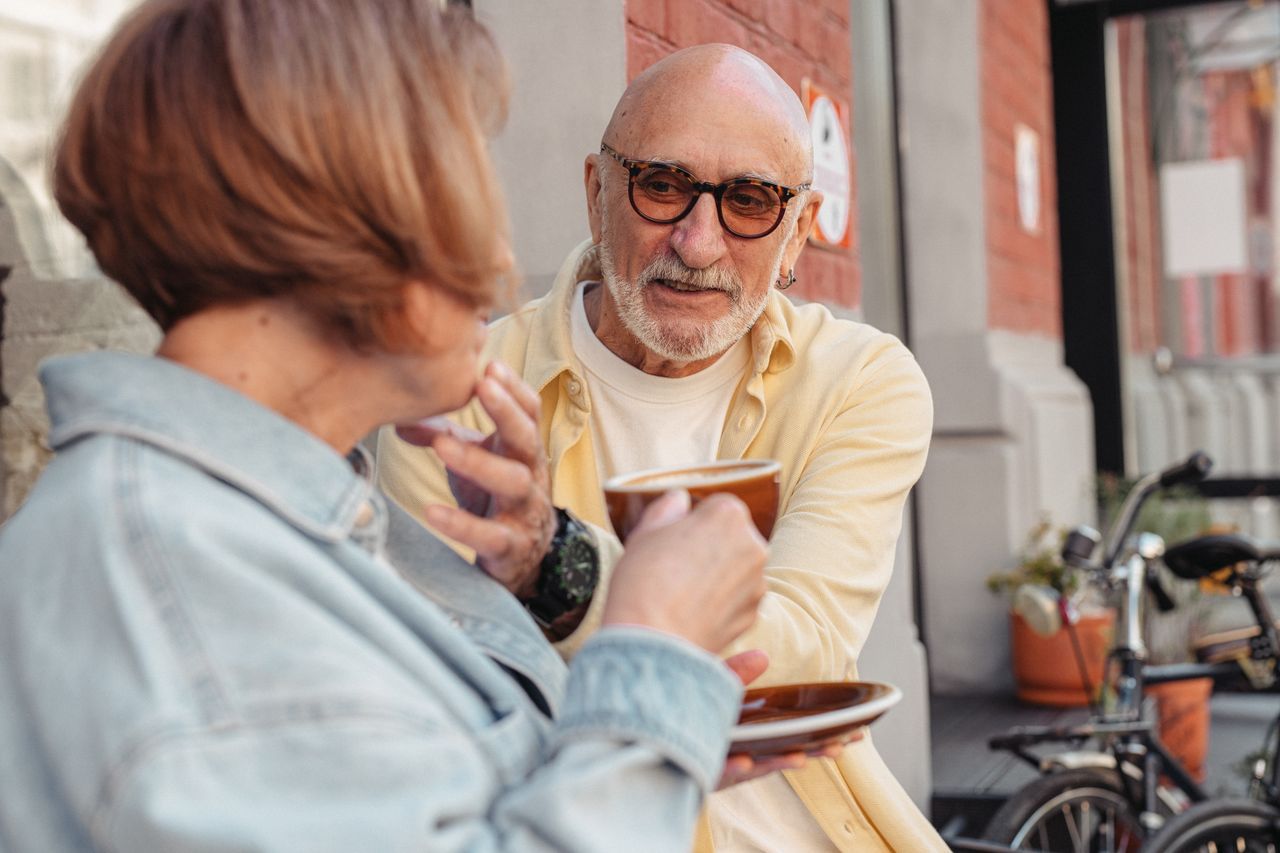
One of the most common ways forced chemistry manifests is the unconscious habit of treating every new person as a candidate rather than just a person. You arrive at a coffee date already running an assessment: is this working? Do I feel something? Is this going somewhere? Could this be it?
That evaluative posture changes how you show up. It makes you less present, more self-conscious, and more likely to either over-invest or dismiss someone too quickly — particularly when chemistry has not arrived on the timeline you expected, which after 60 is more common than most people realise. It also makes the other person’s experience of you slightly different — people can feel when they are being assessed, and most respond by becoming slightly more guarded or slightly more performative themselves.
A few shifts that help reduce the audition dynamic:
Lower the question. Instead of “could this person be my partner?”, try “am I enjoying this conversation?” The first question creates pressure. The second creates presence. You can always evaluate compatibility afterward, but evaluation during the meeting rarely produces useful data — it mostly produces anxiety.
Remove the timeline. If you are carrying a mental deadline — “I want to find someone by spring” or “I have been doing this for six months, something should have happened by now” — that deadline creates urgency that bleeds into every interaction. Urgency and ease cannot coexist. Removing the deadline does not mean accepting that nothing will happen. It means letting things happen at whatever pace they arrive rather than trying to accelerate them through will.
Treat each meeting as complete in itself. A coffee with someone interesting is a good use of an hour whether or not it leads to a second meeting. A walk with someone pleasant is a walk with someone pleasant — not a failed opportunity if no spark appears. When you allow each interaction to be its own thing rather than a step toward something else, you remove the weight that makes meetings feel like auditions.
Stop reading signals in real time. The habit of monitoring — are they leaning in? Did they laugh at that? Are they checking their phone? — pulls you out of the conversation and into analysis. What makes conversation feel easy with the right person is often something you notice after the fact, not something you detect through real-time surveillance. Let the meeting happen. Assess later.
The Space Between Giving Up and Trying Too Hard
There is a middle ground between relentless effort and resignation, and it is where most sustainable dating lives after 50. It does not have a clean name. It is not “manifesting” or “letting go” or “putting yourself out there.” It is something more like: remaining available without being on duty.
In practice, this middle ground looks like:
- Having a profile active without checking it constantly
- Accepting invitations when they feel genuine without creating them through force of will
- Noticing people in ordinary life without turning every interaction into a scouting exercise
- Being willing to say yes to a meeting without needing to feel excited about it in advance
- Allowing a week to pass without any dating activity and not interpreting the quiet as failure
This middle ground is easier to maintain when your life outside dating has substance. If dating is the only source of novelty, social contact, or forward motion in your life, every dating disappointment carries the weight of your entire emotional economy. When your life is already populated with activity, interest, and satisfaction, dating becomes one thread among several — and the absence of results in that one thread does not collapse the whole structure.
If dating has started to feel draining, the issue may not be hope. It may be proportion — how much of your emotional life you have invested in a process that is, by nature, unpredictable.
What “Letting It Happen” Actually Means
“Let it happen naturally” is common advice that is rarely unpacked. In practice, it does not mean passivity. It means something closer to: create conditions where connection is possible, and then stop trying to control which conditions produce it.
The conditions that support natural connection:
- Regular contact with people in settings you enjoy — not because you are scouting, but because you genuinely want to be there
- A social rhythm that puts you in proximity to others without requiring you to perform interest
- Emotional availability — not guarded, not desperate, just present
- Enough self-knowledge to recognise when something fits without needing it to announce itself dramatically
What “letting it happen” does not mean:
- Waiting at home for connection to find you
- Refusing to use apps or attend events because that would be “forcing it”
- Suppressing all desire for connection in hopes that detachment will attract it
- Pretending you do not want what you want
The balance is between effort and surrender. You put yourself in places where connection is possible. You show up as yourself. You remain open. And then you release your grip on what happens next — not because you do not care, but because gripping has not produced better results than openness.
Building connection slowly is often what this looks like in practice once someone appears. The same principle applies before they appear: slow presence rather than urgent pursuit.
Protecting Hope Through Honest Self-Care
Hope is not inexhaustible. It requires maintenance, especially over long stretches of dating without clear progress. A few practices that help protect it:
Acknowledge disappointment without dramatising it. When a promising connection fades, allow yourself to feel the disappointment without turning it into a narrative about your future. “That is disappointing” is complete. It does not need to become “I will never find anyone” or “something is wrong with me.”
Notice what is working. If you have had pleasant conversations, enjoyable meetings, or moments of genuine connection even with people who did not become long-term companions — those are evidence that your capacity for connection is intact. The goal has not been reached, but the ability is not in question.
Take breaks without guilt. Hope often recovers during rest. If you have been actively dating for months and feel depleted, stepping back is not failure — it is maintenance. The guide to taking a break without feeling like you failed covers this in practical terms, and the story of trying again more quietly after a bad experience shows what a considered return looks like. Hope that requires constant action to survive is not hope. It is anxiety wearing hope’s clothing.
Keep your standards. One of the ways hope erodes is through gradual compromise — saying yes to people you are not genuinely interested in because you are tired of waiting. This produces worse experiences, not better ones, and each compromised meeting subtracts from your sense that the process can work. Your standards are not the obstacle. They are the compass.
Remember what you already have. A life with companionship may be what you want. But a life without it — right now, today — is still a life. It contains things you value, routines you enjoy, freedoms you might miss. Hope sits more comfortably alongside a life that is already good than alongside a life that feels suspended until someone arrives to complete it.
The Quiet Version of Readiness
Readiness for connection after 50 does not look like eagerness. It does not look like a polished profile, a packed social calendar, or relentless positivity about the process. It looks more like steadiness — a quiet willingness to be found that does not depend on being found soon.
This version of readiness is less visible and less dramatic than the one dating culture celebrates. It does not make good content for dating advice columns. But it is the version that most often produces connections worth keeping: the person who was not trying too hard, who was simply present in their own life, who remained open without performing openness.
If that describes where you are — hopeful but not urgent, open but not grasping — you are not doing anything wrong. You are doing the thing that is most likely to work, even though it does not feel like doing much at all. Trust the steadiness. It is more attractive than effort, and more durable than enthusiasm.