This story is a composite drawn from conversations with readers who described the specific experience of trying online dating for the first time after 50, having it go badly enough to stop, and then — after weeks or months — deciding to try again with different expectations. Names and details have been changed. The emotional arc is real and common: disappointment, withdrawal, recalibration, and a quieter return. For practical guidance on re-entering dating at a smaller scale, the guide to starting small if dating feels overwhelming covers that territory directly.
The First Try
Graham set up the profile on a Sunday evening in October because his daughter had mentioned it twice and his GP had once, gently, suggested that “more social contact” might help with the flatness he had been feeling since retirement. He was fifty-seven, divorced for four years, and had not been on a date since 2019. The app was one of the large ones — the kind with a name everyone recognises — and the setup process took longer than he expected. Photos were the worst part. He used one from his brother’s birthday in September and another from a walking holiday the previous spring. Neither felt quite right but both were recent and he was smiling in them, which seemed to be the point.
The first week was fine in the way that new things are fine when you do not yet know what to expect. He received a few likes. He sent a few messages. Most went unanswered, which he told himself was normal because articles about online dating always said that response rates were low. He matched with a woman named Sandra who seemed warm and local and interested in similar things. They messaged for four days.
On day five, Sandra asked if he would like to meet for coffee that weekend. He said yes. They arranged to meet at a cafe near the high street on Saturday morning.
She did not come.
He waited thirty-five minutes, checked his phone repeatedly, and then walked home. That evening, Sandra’s profile had disappeared. No message. No explanation. No indication that anything had gone wrong between them. Just absence where a person had been.
It was not the worst thing that could happen. He knew that. He had read enough to know that people were sometimes deceived for months, lost money, or were manipulated emotionally. What happened to him was minor in comparison. But it did not feel minor from the inside. It felt like being made foolish — like someone had watched him get dressed and walk to a cafe with a small, private hope, and then simply not shown up to receive it.
He deleted the app that evening.
The Months Between
Graham did not tell anyone about the no-show for several weeks. When he eventually mentioned it to his daughter — lightly, as though it were funny rather than humiliating — she said, “That happens all the time, Dad. You should try again.” He appreciated the reassurance without being able to use it. The gap between “that happens all the time” and “I would like it to happen to me again” was wider than his daughter seemed to realise.
The winter passed. He kept walking — two or three miles most mornings through the park near his flat. He joined a photography group that met fortnightly, and found that he enjoyed the structure of it: a specific task, a small community, no pressure to be interesting beyond the photos themselves. He cooked more carefully. He read in the evenings without checking his phone for notifications that were not going to arrive.
He was not miserable. He was adjusting to something — the recognition that wanting company did not automatically produce it, and that the process of looking for it could feel worse than the absence. That realisation sat uncomfortably alongside the other truth: he was still lonely in the specific, moderate way that a full schedule does not fix. The mornings were fine. The evenings were long. The weekends had a quality of endurance about them that he disliked noticing.
By February, the thought of trying again began arriving — not as motivation, but as a question. Not “I should try again” but “could I try again differently?” The difference mattered to him. The first attempt had been shaped by other people’s suggestions and a vague sense that he ought to. A second attempt, if it happened, would need to come from something more specific.
What He Changed
In March, Graham downloaded a different app. Smaller. Slower. Aimed at people over fifty specifically — one of the senior-focused platforms rather than the mainstream one he had tried before. He spent two evenings on the profile — not because he was optimising it, but because this time he wanted it to sound like him rather than like someone trying to seem appealing. He wrote that he liked walking and photography and cooking, that he was retired and mostly content with his life, and that he was looking for someone to spend time with rather than someone to fill a gap.
He did not upload a photo immediately. He waited a day, considered it, and then chose one from the photography group — him holding a camera, looking at something out of frame, not posing. It was less polished than the birthday photo from his first attempt. It was more honest.
This time, he set boundaries he had not thought to set before:
He would not message more than two people at a time. The first attempt had involved a scattered approach — liking profiles quickly, sending several messages, trying to create volume. The volume had produced anxiety rather than opportunity.
He would not suggest meeting until at least a week of steady conversation. The speed of the first attempt — four days from first message to arranged meeting — had left no time to sense whether the connection was real.
He would not check the app more than once a day. The compulsive checking during his first attempt had turned his phone into a source of low-grade tension rather than a tool. If dating had started to feel draining, the checking was half the reason.
These were not strategies from a dating guide. They were corrections born from experience — the specific experience of having tried one way and found it incompatible with his nervous system. He did not need more confidence. He needed less exposure to the parts of online dating that had made him feel small.
A Conversation That Stayed
In his second week back, Graham matched with a woman named Judith. Her profile mentioned birdwatching, a recent move from Manchester, and a preference for “people who mean what they say.” He liked the directness of that last part. He sent a short message about a kingfisher he had photographed the previous week at the canal.
She replied the next morning. Not immediately — which he noticed and appreciated. They exchanged messages over the following days at a pace that felt sustainable: one or two a day, each substantial enough to be worth reading, none so long that responding became a chore.
By day ten, he knew that Judith was sixty-one, that she had moved south after her husband died three years ago, that she walked most mornings along the same canal where he had seen the kingfisher, and that she found the transition from married life to single life less dramatic than she had expected — “more quiet than sad” was how she put it. He liked the precision of that.
He did not feel the urgent pull he had felt with Sandra. Instead he felt something more like recognition — the sense that here was a person whose pace matched his, whose honesty seemed structural rather than performed, and whose presence in his phone had become something he looked forward to without depending on.
On day twelve, Judith wrote: “I walk the canal most mornings around 8. If you’re ever there at the same time, it would be nice to walk together. No pressure if not.” The invitation was so low-key that it took him a moment to register it as an invitation at all. It was not a date. It was not even an arrangement. It was just: I am here, you are sometimes here, we could overlap.
He said he would like that.
The Walk
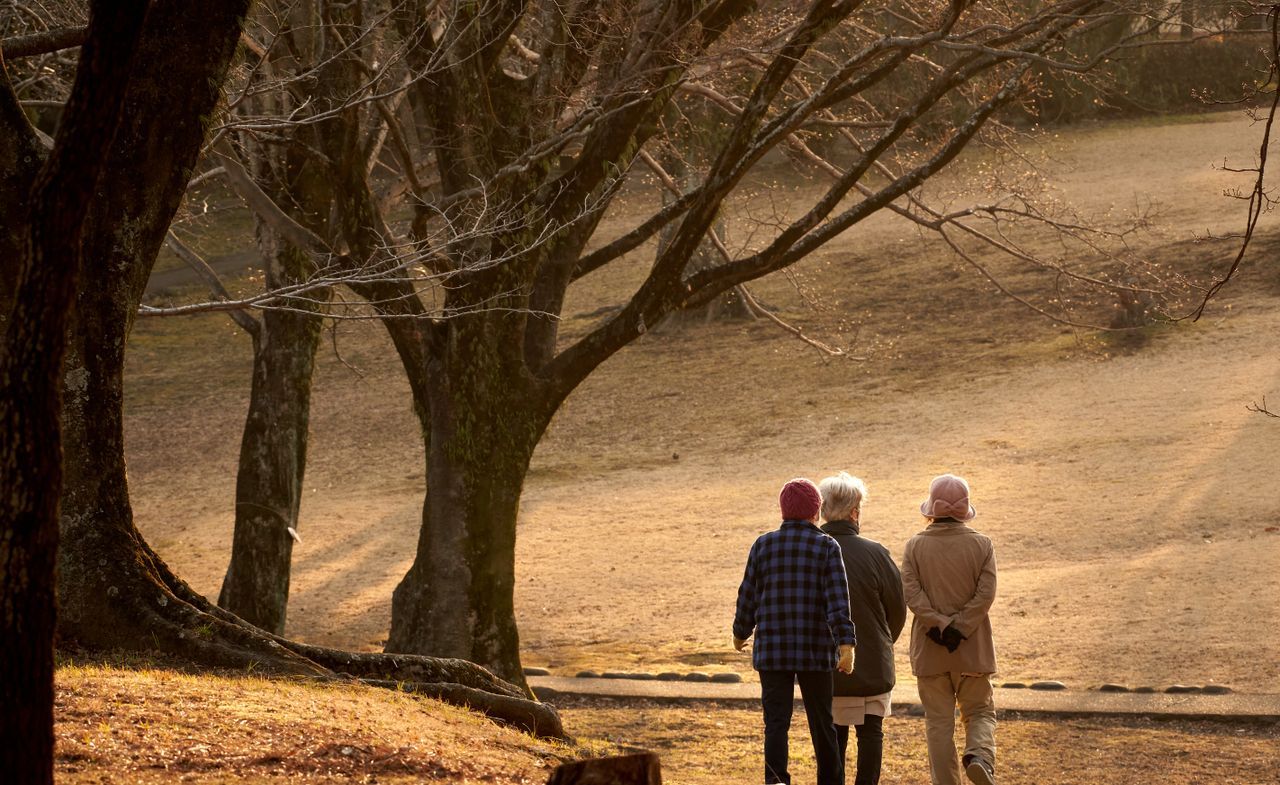
They met on a Thursday morning in April. The canal path was quiet at that hour — a few runners, a dog walker, the heron that Graham now thought of as a resident rather than a visitor. Judith was already walking when he arrived, and she raised a hand when she saw him — not a wave exactly, more an acknowledgement. They fell into step together without any of the formal beginning that a date would have required.
They walked for forty minutes. The conversation moved between birds, the neighbourhood, retirement, and a documentary they had both happened to watch the previous evening. Nothing personal in the confessional sense. Nothing that required courage. Just two people occupying the same stretch of morning and finding the overlap comfortable.
When the path looped back toward the car park where they had started, Judith said, “That was nice. Same time next week?” Graham said yes.
He walked home feeling something he struggled to name afterward. Not excitement — it was quieter than that. Not relief — he had not been anxious. Something closer to steadiness. The sense that this was a pace he could maintain, a dynamic he could return to without it costing him anything. A version of connection that did not require him to perform or hope too hard or risk the specific humiliation of showing up somewhere and finding no one there.
What It Became
Over the following weeks, the Thursday walk became a fixture. They added a second walk on Mondays. By May, Judith had texted him a photo of a grebe nest she found, and Graham had sent her a print of the kingfisher photo that had started their conversation. Small exchanges. Steady accumulations. Nothing that announced itself as significant but everything that, taken together, amounted to a connection that both of them were choosing to maintain.
Graham did not know what to call it. When his daughter asked if he was seeing someone, he said, “There is a woman I walk with.” His daughter pressed for more. He said, “We walk. We talk. It is good.” He could hear that this did not satisfy her sense of what dating should produce. But it satisfied his.
The bad experience from October had not disappeared. He still thought about it occasionally — the cafe, the empty chair, the walk home. But it occupied less space now. Not because Judith had replaced it, but because the second attempt had shown him something the first one could not: that connection was possible at a scale he could tolerate, and that the version of online dating that had hurt him was not the only version available.
If he had advice for someone in the position he was in last autumn — wounded by a small humiliation and unsure whether trying again was worth the risk — it would be simple. Try again smaller. Try again slower. Try again with rules that protect your dignity rather than rules that maximise your exposure. The goal is not to overcome your caution. The goal is to keep hope without forcing chemistry — and to trust that the right pace for you is the right pace, regardless of what anyone else’s timeline looks like.
What companionship can look like after 50 is different for everyone. For Graham, it looked like a canal path on a Thursday morning and someone who raised a hand when she saw him coming. That was enough. It still is.