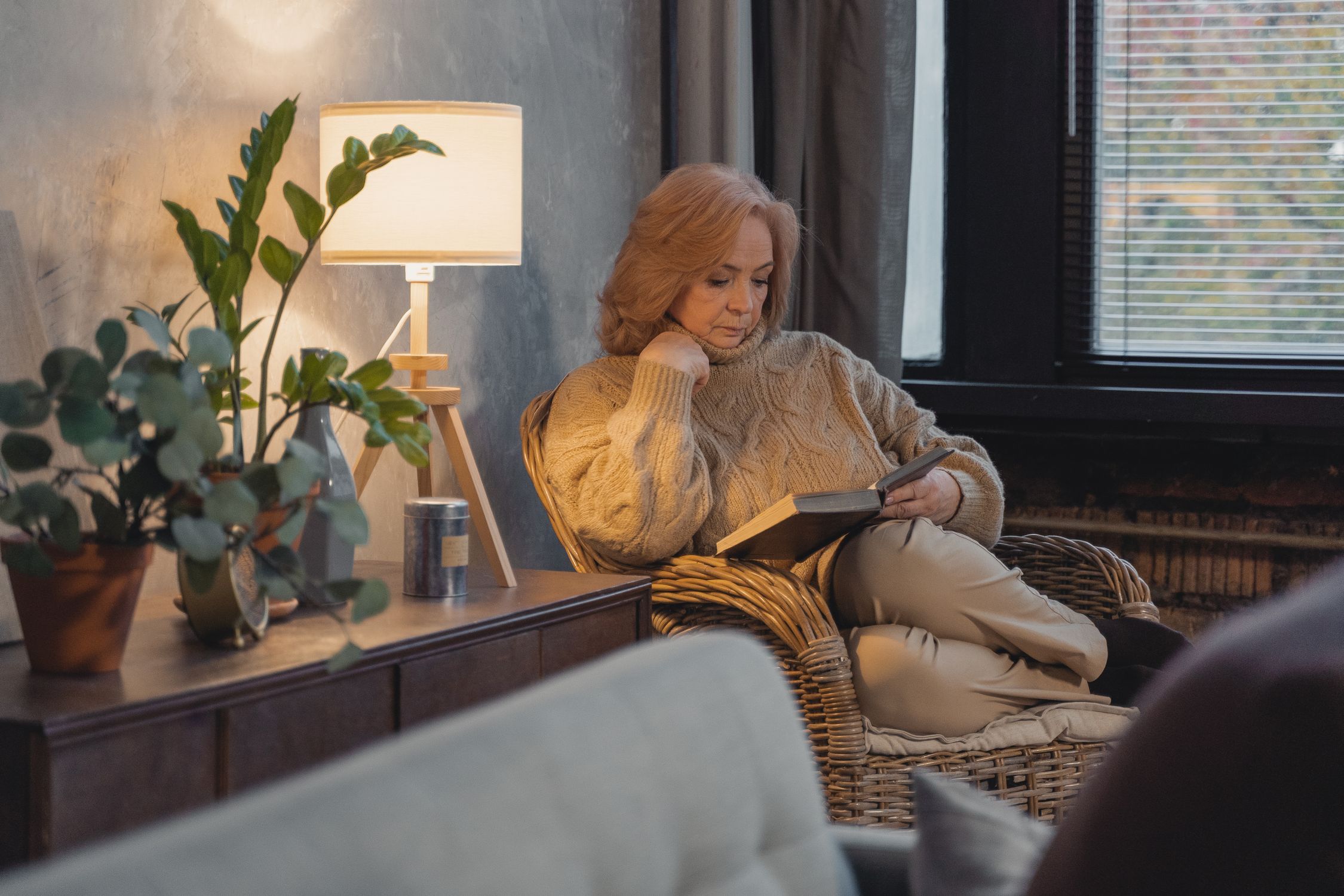
This story is a composite drawn from conversations with readers who described the specific experience of wanting companionship after years of caregiving — not the dramatic version, but the quieter one: the gradual recognition that something was missing, the uncertainty about how to begin, and the discovery that connection could arrive without requiring everything to change at once. Names and details have been changed. The emotional arc is common enough that many former caregivers will recognise it. For practical guidance on this transition, the guide to dating after years of caregiving covers the more structured side of the same territory. If your caregiving is still active and you are wondering whether dating is even possible right now, the guide to dating while still caring for a parent addresses that specific constraint.
The Quiet After
For six years, Helen’s mornings began the same way. She would wake before her alarm, walk down the hall to her mother’s room, and check. Check that the breathing was steady, that the covers had not been pushed off in the night, that the water glass beside the bed was still within reach. Then she would begin the sequence: medication, breakfast, the slow negotiation of getting a ninety-one-year-old woman comfortable enough to face the day.
Helen was fifty-four when the caregiving started and sixty when it ended. Her mother died on a Thursday in February, in the hospice bed that had been set up in the room that used to be a study. The end was expected and still felt sudden. Helen sat in the kitchen afterward with a cup of tea that went cold, and thought: I do not know what tomorrow looks like. For the first time in six years, no one needed her to show up at any particular time.
The relief arrived, as it does for most caregivers, tangled with guilt. She was relieved that her mother was not suffering. She was relieved that the house was quiet. And she felt guilty for noticing the relief before the grief had settled properly, as if one should have waited for the other. Both feelings were true at once. Neither cancelled the other out.
What Helen did not expect was how long the quiet would take to feel like freedom rather than emptiness. The NAC/AARP Caregiving in the U.S. report estimates that the average caregiver spends 26 hours per week providing care — more than a part-time job, sustained for years. When that structure disappears, what remains is not a blank canvas. It is a blank schedule, which feels different. A canvas suggests possibility. A blank schedule, after years of fullness, suggests absence.
Six Months of Not Knowing
The first months after her mother’s death, Helen did sensible things. She cleaned the room that had been a sickroom. She resumed the swimming she had dropped three years earlier. She had lunch with her sister more often. She filled time in ways that seemed appropriate for someone in her situation — grieving, recovering, adjusting.
She did not think about dating. Not because she had decided against it, but because the category did not yet apply to her life. She had been married for fourteen years, divorced at forty-seven, and then moved almost immediately into caregiving. The seven years between her divorce and her mother’s death had passed in a kind of suspended attention — there was no space for anything new because the existing demands consumed everything available.
By August — six months after her mother died — Helen noticed something that surprised her. She was lonely in a way that her sister, her swimming, and her house could not address. Not dramatically lonely. Not crying-in-the-kitchen lonely. But aware, with increasing frequency, that the evenings were very long, and that she had no one to tell about the ordinary things that happened during the day. The radiator repair. The strange bird in the garden. The book she finished that she wanted to discuss with someone who was not her sister.
This kind of loneliness — specific, moderate, unglamorous — is what most former caregivers describe. It is not the loneliness of isolation. It is the loneliness of a life that works fine but has a shape-sized gap in it that no existing relationship quite fills.
The Question That Would Not Leave
Helen did not decide to try dating. What happened was slower than a decision. The thought simply kept arriving: what if there were someone? Not a partner in the full sense. Not someone to live with or merge lives with. Just someone steady, present, interested in her company the way she might be interested in theirs.
The thought embarrassed her slightly. At sixty, after years of caregiving, with a body that moved more slowly than it used to and a social life that had contracted to fit around obligation — who was she to want this? The embarrassment was familiar to many former caregivers. Years of putting someone else first can make your own desires feel slightly illegitimate, as though wanting something for yourself requires a justification that wanting things for others never did.
She mentioned the thought to her sister over lunch in September. Her sister — who had been married for thirty years and could not quite imagine Helen’s situation from the inside — said, “You should try one of those apps.” Helen said she would think about it, which meant she was not ready but could not say why.
What she was not ready for, she realised later, was the performance of it. Setting up a profile meant describing herself, and she did not know how to describe what she was. A former caregiver? A divorced woman? A woman who liked swimming and reading and quiet evenings? None of these were wrong. They just did not feel like an invitation.
A Smaller Beginning
What happened instead was less deliberate and more useful.
In October, Helen joined a local walking group. Not because she was looking for companionship — or not only because of that — but because her GP had suggested more regular exercise, and walking alone was something she already did enough of. The group met on Saturday mornings at a park about ten minutes from her house. Eight to twelve people, mostly over fifty, mostly women, walking a loop that took about an hour.
She went for three weeks before speaking to anyone beyond pleasantries. On the fourth week, a man named David fell into step beside her toward the end of the walk. He was sixty-three, recently retired from teaching, and seemed to enjoy conversation without requiring it. They talked about the park, then about the neighbourhood, then about nothing in particular. When the walk ended, he said goodbye without asking for her number or suggesting they meet separately. Helen found this reassuring rather than disappointing.
The following week, the same thing happened. And the week after that. By November, their Saturday walks had a quiet regularity that neither of them acknowledged aloud. They were simply the two people who ended up walking together, and neither seemed to mind.
What Companionship Felt Like at First
The first thing Helen noticed was that David did not ask much of her. This mattered more than she expected. After six years of being the person who gave, who showed up, who monitored and managed and anticipated — the absence of demand felt like a gift she did not know she needed.
He did not ask her to text between walks. He did not ask about her week in a way that required a detailed account. He did not fill their time together with questions designed to assess her suitability for something. He simply walked beside her and talked about whatever came up, and seemed satisfied when the hour was over and they went their separate ways.
This was companionship in its most basic form: the reliable presence of someone who was pleased to see you without needing you to perform. Helen recognised it as the thing she had been lonely for — not romance, not partnership, not the negotiated closeness of a relationship with expectations and trajectory. Just someone whose presence in her week made the week slightly warmer.
By December, they had exchanged numbers. Not in a charged way — David had texted her one Tuesday to say the walk was cancelled because of ice. The next week, Helen texted to ask if it was back on. A thread developed from there: small, practical, occasionally warm. He sent a photo of a heron he saw on a solo walk. She mentioned a book she thought he might like. Nothing that could be called dating. Everything that could be called knowing someone.
The Moment She Nearly Pulled Back
In January, David suggested they have coffee after the walk instead of parting at the car park. Helen said yes without hesitation and then, walking home, felt a flutter of something that was not excitement. It was caution. The specific caution of someone who spent years giving too much and has finally rebuilt a life where the demands are manageable.
She noticed the thought clearly: if this becomes something, will it take from me again?
The fear was not rational in the way fears sometimes are. David had done nothing to suggest he would be demanding. But the pattern was deeper than the person. Helen’s nervous system had learned, over six years, that closeness meant obligation. That another person in your life meant monitoring their needs, accommodating their schedule, adjusting your own comfort for theirs. The lesson had been taught so thoroughly that even the mild suggestion of coffee after a walk triggered the defence.
She went anyway. The coffee was pleasant. David talked about his daughter’s new flat and the difficulty of assembling furniture from instructions that assumed you could read Swedish. Helen laughed — genuinely, without effort — and noticed that she had not laughed like that in a while. Not because her life was humourless, but because laughter with another person has a different quality than laughter alone. It requires less.
What Grew Slowly
Over the following months, the connection between Helen and David grew in the way that later-life companionship often does: without announcement, without defining conversations, without the scaffolding of early-stage romance.
They walked on Saturdays. They had coffee afterward, sometimes for twenty minutes, sometimes for an hour. David started texting her midweek — not daily, but often enough that his name appearing on her phone became ordinary rather than surprising. In March, they went to a gallery together on a Wednesday afternoon. In April, he invited her to dinner at his flat — something he cooked himself, nothing elaborate.
Helen did not call it dating. She was not sure what she called it. When her sister asked, she said, “There is a man I spend time with. It is nice.” Her sister asked if it was serious. Helen said, “It is steady. That is enough.”
The steadiness was the point. After years of crisis-level attention — of days structured by someone else’s declining body — steadiness felt like the most valuable quality a person could offer. David was steady. He showed up when he said he would. He did not escalate. He did not demand. He seemed to understand, without being told, that Helen’s capacity for closeness had a shape, and that pushing against the shape would not expand it but collapse it.
By summer, Helen’s week had a different texture. It was still mostly hers — her swimming, her reading, her quiet mornings. But threaded through it was the presence of someone who knew her name, her preferences, her sense of humour, and her Saturday morning pace. Someone who made the loneliness she had felt in August seem like it belonged to a different year, which it did.
What She Would Say Now
If someone asked Helen whether she was in a relationship, she would pause before answering. Not because she was uncertain, but because the available words did not quite fit. She was not single in the way she had been a year ago. She was not partnered in the conventional sense. She was accompanied — steadily, warmly, without the weight she had feared.
What she would tell another former caregiver, if asked:
The wanting is allowed. After years of subordinating your own needs to someone else’s, wanting companionship for yourself can feel selfish or premature or frivolous. It is none of those things. It is the natural response of a person whose attention has been freed and whose life now has room for something chosen rather than obligated. If you are still sorting out what exactly you want — companionship, dating, or something more — that clarity often comes gradually rather than all at once.
The pace does not need to match anyone else’s. What companionship can look like after 50 varies enormously from person to person. Helen’s version — a weekly walk that became a steady presence over months — is one of many possible shapes. The point is not the speed. It is the willingness to remain available to connection without forcing it into a form that does not fit your life.
The caution is not a flaw. If closeness triggers the old caregiving reflex — the instinct to monitor, accommodate, and give beyond your comfort — that is information, not a problem. It means your boundaries matter and that any connection worth having will respect them without requiring you to explain why they exist.
And the beginning, when it comes, may not look like a beginning at all. It may look like an hour on a Saturday morning, walking in the same direction as someone who does not ask anything of you except your company. If you want company more than intensity, there are quieter ways to meet people that match that preference. That is enough to start with. That was enough for Helen.